Fixing a Broken System
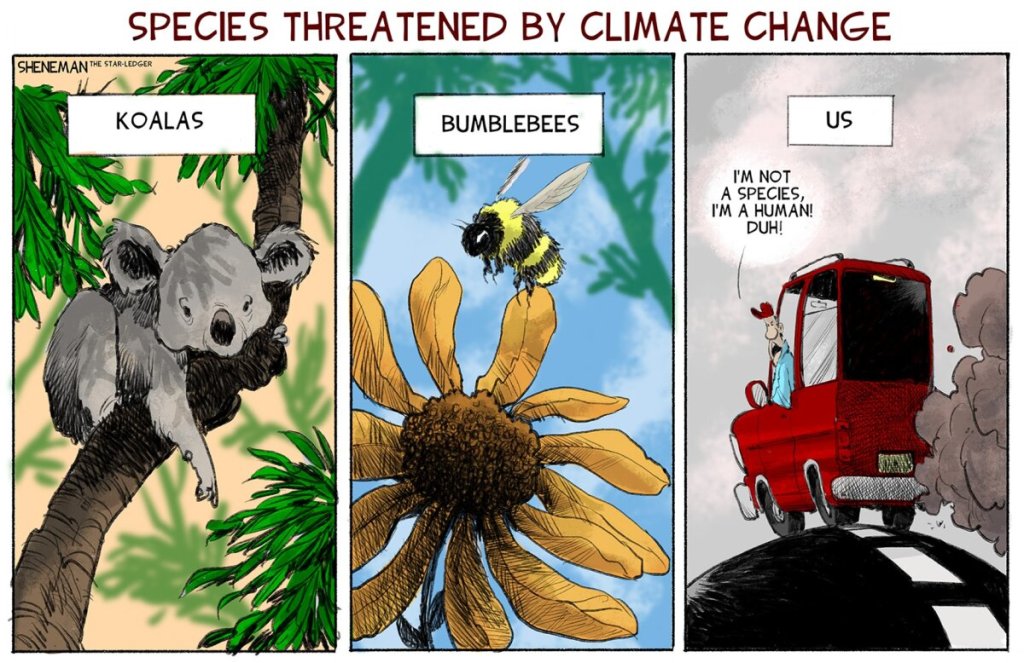
You know about climate change. Are you also aware that we’re living through an extinction event? If you’re not familiar with the term biodiversity, it’s defined by the WWF as: “all the different kinds of life you’ll find in one area—the variety of animals, plants, fungi, and even microorganisms like bacteria that make up our natural world.” (World Wide Fund for Nature)
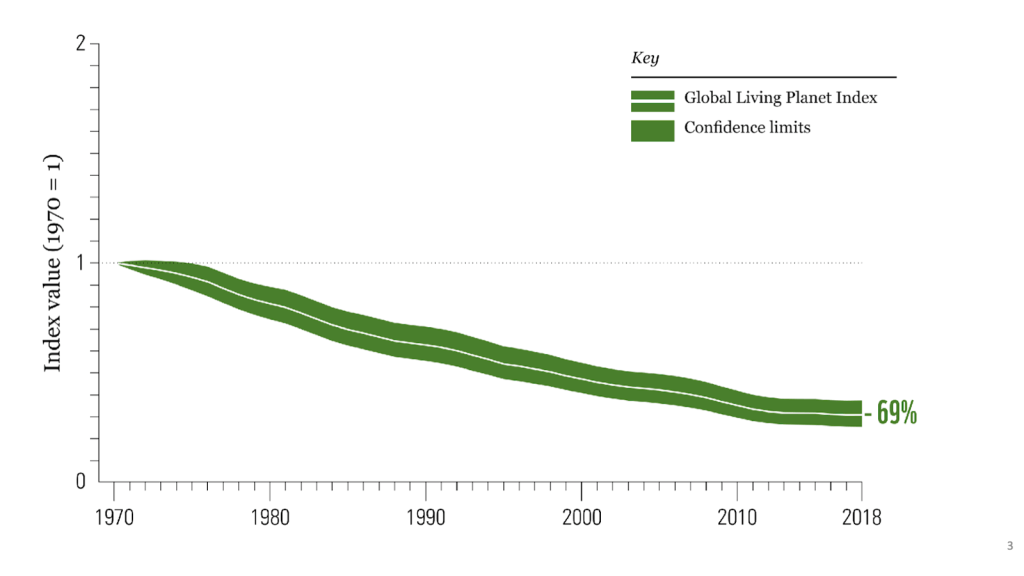
Since 1970, the planet has lost 69% of its animal species. (World Wide Fund for Nature)
When it comes to climate change, extreme weather, droughts, wildfires, heat domes, or the lack of fresh water get the most attention. People tend to dislike “bugs,” so biodiversity is usually an afterthought. But the climate emergency and the biodiversity crisis share the same underlying cause, the unsustainable use of the Earth’s natural resources.
This brings me to one of my favorite topics, analyzing data and utilizing it to make better decisions. We have two inter-related crises on our hands, and both need solutions in short order. We need to follow the data.
The U.S. has around 40 million acres of lawns. (Davis) Although grass and soil can act as carbon sinks, the emissions from gas-powered lawn equipment negate these benefits. Emissions from these tools are both nasty and significant in scope. In addition to spewing carcinogens and up to five percent of the country’s air pollution (Son), they contribute to ground-level ozone. (New Hampshire Department of Environmental Services, 2020)
Lawns are also ecological deserts, usually monocultures consisting of a single grass species. This lack of biodiversity makes them highly susceptible to diseases and pests. As the largest irrigated crop in the United States, lawns require large amounts of water to maintain their pristine green appearance.
To deal with the disease and pest problem, corporations are happy to sell products to help you have the perfect American lawn. I’ll use Scotts Miracle-Gro ($SMG) as an example.
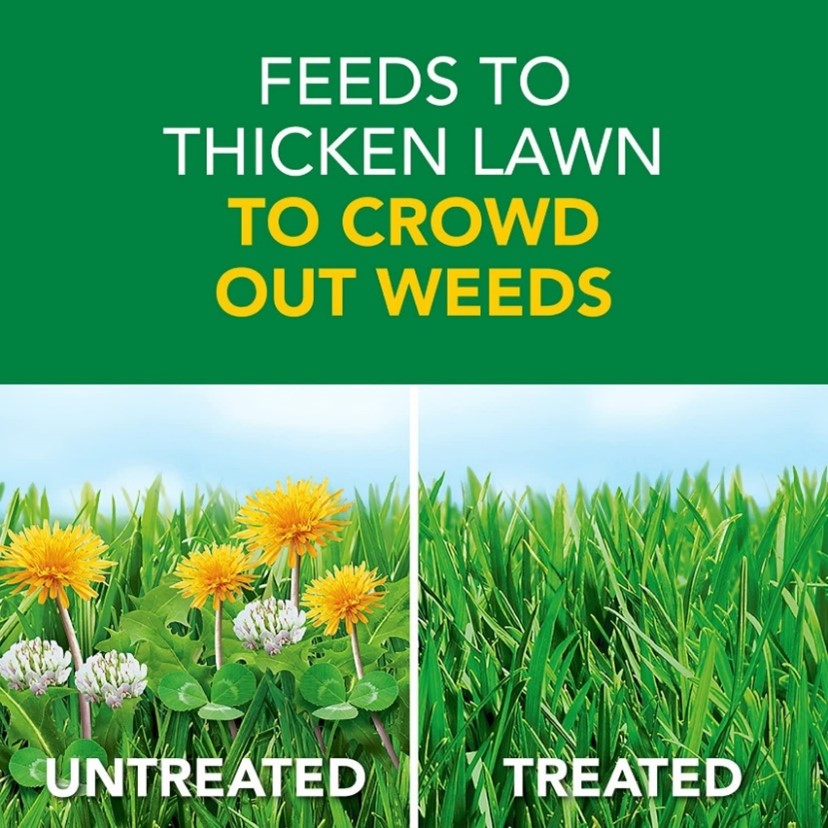
Pictured: Watch out for those nitrogen-fixing pollinator-friendly clovers! (Source)
While the company’s products are effective for lawn “maintenance,” their use poses risks to groundwater and local bodies of water. They can kill beneficial plants and the manufacturing process for them is energy-intensive. (Son)
Scotts produces a Corporate Sustainability Report that details its environmental efforts. (Scotts Miracle-Gro) Given the state of our climate, the biodiversity crisis, and the company’s emissions data pictured below:
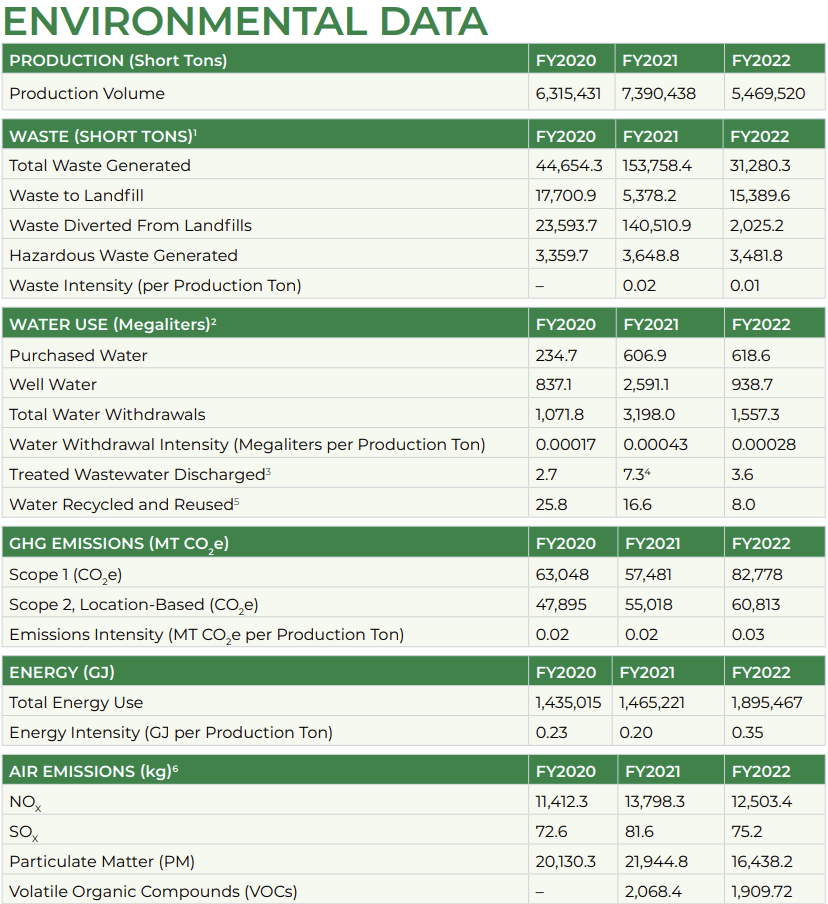
I must wonder; do you think Scotts cares? After all, our unsustainable land stewardship system contributes meaningfully to climate change and biodiversity loss. Lucky for you, SMG has us covered:
“With a changing climate, some of our customers may need products that enable resource efficiency specific to their region. Our ProVista™ turfgrass requires less frequent maintenance and reduces the amount of energy to maintain a lawn when compared to conventional turfgrass. While all yards can minimize and absorb carbon dioxide, ProVista™ requires less mowing and weed control than conventional turf. By requiring 50% less mowing, ProVista™ helps reduce carbon emissions generated by gas-powered lawn mowers.”
There’s nothing wrong with this. After all, the company is in business to make money for shareholders. But will the weed control required with ProVista turfgrass also be unsustainable? If so, “Get off my lawn.”
Like most corporations and governments, Scotts is taking an incremental approach to tackling the climate crisis. Unfortunately for us, incremental actions have become irrelevant as the impacts of the continued destruction of our natural ecosystem accelerate.
We’re experiencing another hot start this year, and 2024 is on track to be one of the warmest years ever recorded. NOAA has projected a high likelihood that 2024 will rank within the top five warmest years, with nearly a 100% certainty of being in the top ten. (Fox Weather)If you’re not in the Pacific Northwest, you probably experienced above-average temperatures in June, and NOAA forecasts similar conditions for July. (Halpert)
It’s increasingly clear that delayed action and incremental changes aren’t fixing the problem. We need to follow the data and adapt for resiliency and sustainability.
We need to get wild. Ecologist Douglas Tallamy has been preaching this for years. We need to build back the systems we destroyed. He’s not asking us to go back to a pre-industrialized society. Nobody is telling us to have no lawn or to live with no electricity. I’m a sports fan. I think the approach can be summarized with a quote from Field of Dreams, “If you build it, they will come.” Here’s a very engaging video talk he gave at Google:
People are following Doug’s advice all over the country. Over 40,000 homes are on the Homegrown National Park map, but we need to expand this effort to give our planet a shot at healing.
The reason this must be done in our backyards is that we simply don’t have enough public lands on which to do it. 96% of land east of the Mississippi River is privately owned. (Leonhardt and Cox) The small percentage of landowners who are on Doug’s map need more help. While 40,000 homes are a lot, the small plots of land are too dispersed to provide helpful pathways for migrating birds and pollinators. We need more people to fundamentally change the way we think about our outdated status symbol that never should have been industrialized.
We never needed to “improve” our landscapes in this manner. We’ve known this too for a long time. In 1903, on the rim of the Grand Canyon, Teddy Roosevelt famously told the people of what would become Arizona to
“Leave it as it is. The ages have been at work on it, and man can only mar it.”
(Roosevelt) Not everybody liked the message. The situation then was the same as it is now, there were those in attendance who viewed nature as something to take from, rather than something of which we are a part.
Looking at the data and science, it’s clear that Teddy was right. This was never ours to modify to the extent we have. There’s no going back, but the path forward is clear. We need to stop doing the wrong thing. For some things, like air travel and global transportation logistics, that’s incredibly hard. For lawns though, it is much easier.
Scotts Miracle-Gro is rightly concerned about this environmental crisis as well, as it has already impacted sales as consumers become more educated. In its CSR, the company highlights its efforts to support pollinators by providing grants to the National Fish and Wildlife Federation (NFWF). In 2022, the NFWF announced $2.9 million in grants to conserve monarch butterflies and other insect pollinators in 17 states. The total monetary impact, with the addition of matching funds, was $7.4 million. (National Fish and Wildlife Foundation) But here’s the problem with the approach, In the same fiscal year, U.S. consumers spent over $2.9 billion on the company’s products.
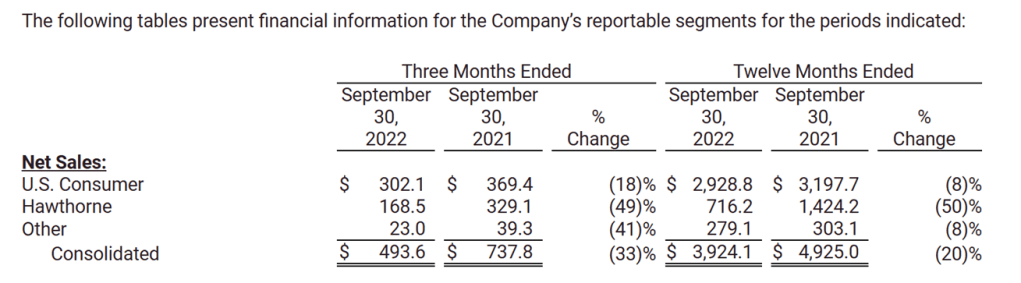
So how much money did Scott’s make for shareholders in the same year? That is, after all, the point of doing business. The answer is that they didn’t. SMG has been losing business for years as more consumers wake up to the biodiversity crisis. The company reported a net loss for 2022 of almost $438 million. (Scotts Miracle-Gro, “Earnings Release”)
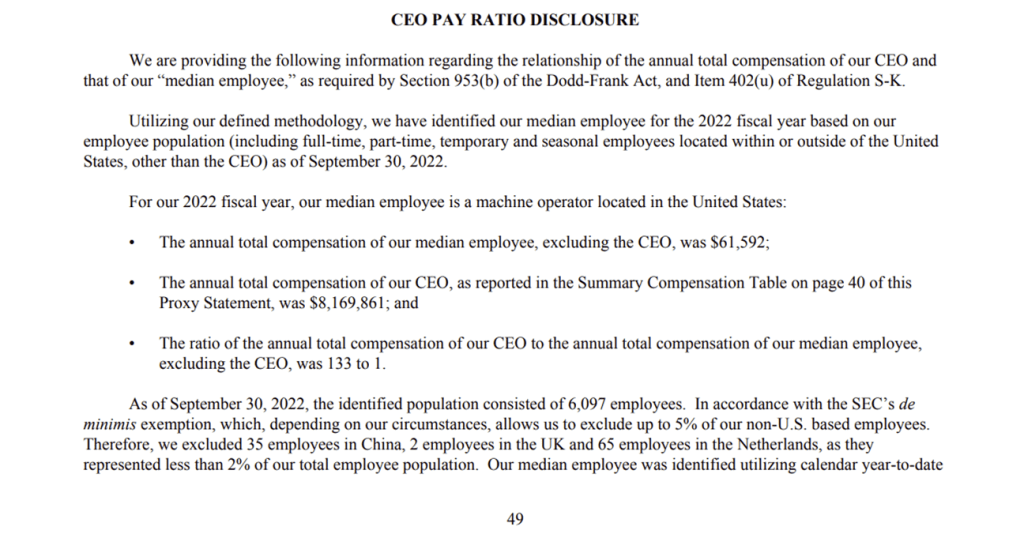
You would think that for a company so severely impacted by the environmental crisis, they’d be doing what’s best for shareholders and finding real solutions. If I owned the business, I’d be focused hard on figuring out how to fundamentally shift the model. But, that’s not how management gets paid.
SMG’s 2022 Annual Report highlights the key performance indicators and operating metrics used to monitor the company’s financial condition and performance. These metrics are:
- consumer purchases (point-of-sale data),
- market share,
- category growth,
- net sales (including unit volume, pricing and foreign exchange movements),
- gross margins,
- advertising to net sales ratios,
- income from operations,
- income from continuing operations,
- net income,
- earnings per share,
- earnings before interest, taxes, depreciation and amortization (“EBITDA”)
- leverage ratio.
The report goes on (emphasis added):
To the extent applicable, these metrics are evaluated with and without impairment, restructuring and other charges that do not occur in or reflect the ordinary course of our ongoing business operations. Metrics that exclude impairment, restructuring and other nonrecurring items are used by management to evaluate our performance, engage in financial and operational planning and determine incentive compensation because we believe that these measures provide additional perspective on the performance of our underlying, ongoing business. We also focus on measures to optimize cash flow and return on invested capital, including the management of working capital and capital expenditures.
(Scotts Miracle-Gro, “Annual Report”)
What’s missing from the list? How about the company’s impact on the planet? Interestingly, even if the company’s whole business is impaired by climate change, compensation can be based on numbers that are not. In other words, they can pay themselves very handsomely at the expense of, well, everybody.
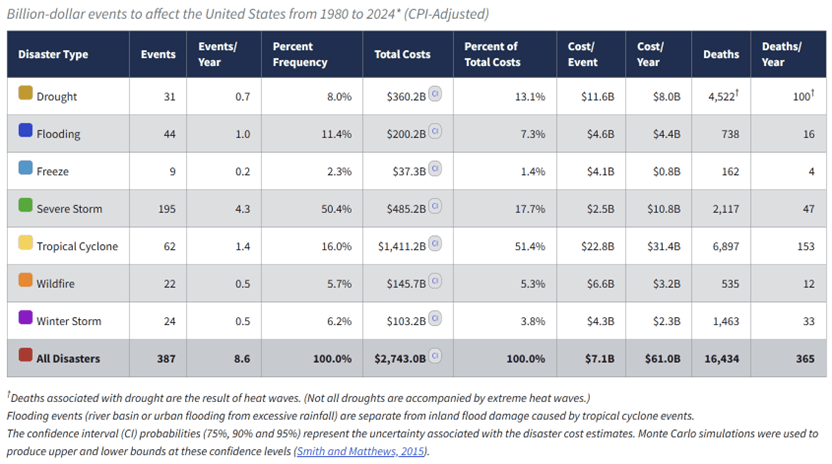
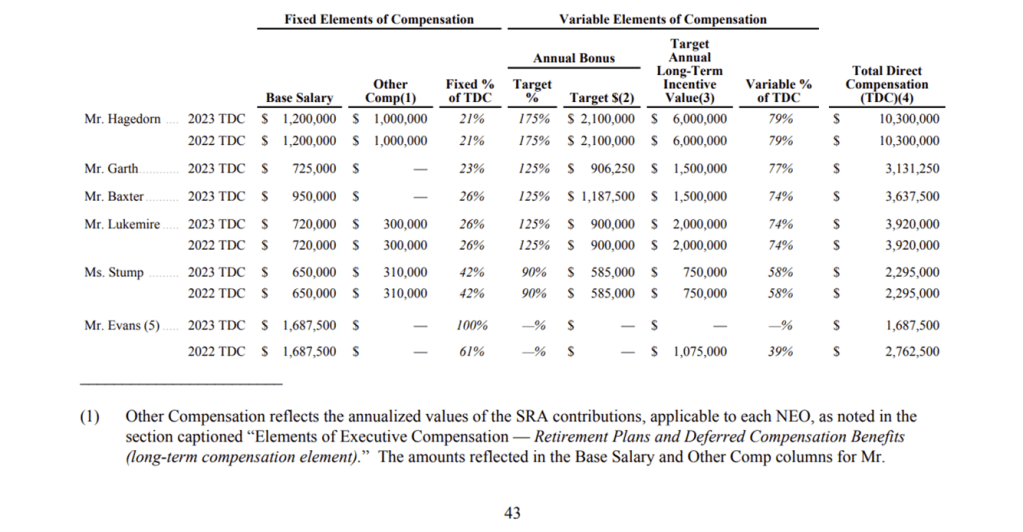
So, if the shareholders don’t benefit, the planet doesn’t benefit, and our local ecosystem gets destroyed by the product, who does? Part of the answer is in the $613 million of selling, general, and administrative costs, or SG&A, the company reported in 2022. The company’s Proxy also has information on various administrative expenses.
Scotts would likely point to their CSR if you called investor relations and expressed your concerns over the company’s contribution to the environmental crisis. It’s very well done and has lots of information. The word “risk” appears in the document 45 times. Here’s how the company determines which risks to prioritize:

I love the colors, very engaging! Most of the risks mentioned in the report deal with the misuse of their products, and how they engage stakeholders and customers to reduce those risks.
SMG views product safety and stewardship as high-priority issues, as it should.
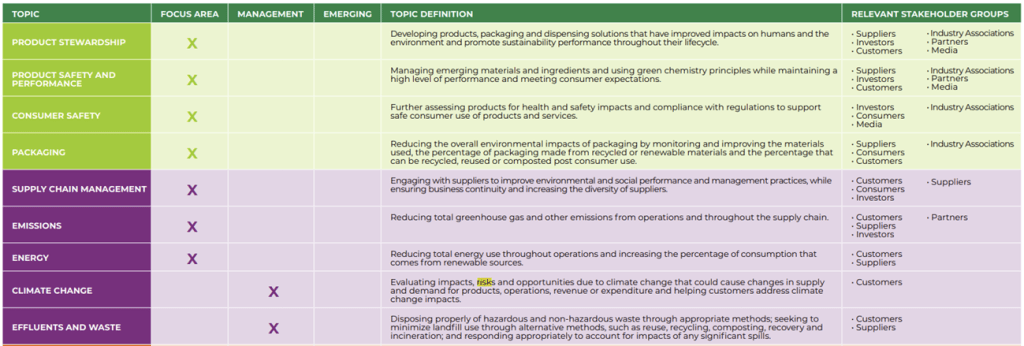
Notice though, that climate change isn’t a focus. Biodiversity is included elsewhere in an excellent example of “greenwashing.”

Materials like this are designed to distract from the real problem. While beneficial, their overall impact is barely a drop in the bucket compared to the negative effects of the company’s products. The whole page is an attempt to divert attention from larger environmental issues.
There must be a reason for that, so let’s keep digging. What does Scotts sell that consumers need at our most basic level? Here’s how the company thinks about it, “At Scotts Miracle-Gro, everything we do is related to the climate. We design products to work in different climates, and under various conditions, to meet the needs and preferences of our customers.” (2022 SMG CDP Climate Response)
Therein lies the problem. We don’t need their products; they want us to prefer them.
If everything the company does is related to the climate, you would think a climate scientist would oversee these material and fundamental business risks. However, the oversight of SMG’s sustainability programs is led by their Chief Marketing Officer. The same person who shares the responsibility for getting consumers to prefer a damaging product they don’t need. (2022 SMG CDP Climate Response)
The production of a comprehensive CSR report can signal a company’s dedication to sustainable and responsible business practices. However, a lengthy and sporadically detailed 62-page CSR report serves to distract from the substantial negative impacts that the company’s products may have. By overwhelming stakeholders with extensive data and initiatives, the report obscures critical issues and deflects attention from the core problems with the company’s operations and products. Management must think investors have their collective heads in the sand. If they cared about the company’s impact on the planet, they’d make immediate changes to promote the long-term viability of the business. But that’s not how corporate management teams get paid.
There is a second part of that Teddy Roosevelt quote mentioned earlier that is, unfortunately, usually left out.
“What you can do is to keep it for your children, your children’s children, and for all who come after you, as one of the great sights which every American if he can travel at all should see.”
So, let’s get wild on a grand scale again. Let the planet heal. Let that lawn go and see what happens. Managing this rewilding will be a lot of work, and the good people working at Scotts Miracle-Gro are more than welcome to play a part.
Frankly, nature needs all the help it can get. There are also a lot of invasive habitat-destroying plant species to manage as we re-wild. The same goes for landscapers and home and garden stores. Fundamental changes can seem hard, but it’s less scary if you break them down into their parts. It gives you more power over the human fear of change. It happens. The work and the jobs don’t go away, they become more meaningful. The unnecessary destruction of our environment must stop. After all, it’s not like shareholders or the planet benefit from Scotts’ business practices. In their climate disclosures, SMG states (emphasis added), “We design products to work in different climates, and under various conditions, to meet the needs and preferences of our customers.” Of course, there is a reason for the company to include “preferences” in this sentence. Nobody needs the product.

But how can we expect billion-dollar corporations with self-interested management teams to change and finally do the right thing, when we’re the ones that keep stocking and buying their wares?
There is no single product or practice that if changed would eliminate the impacts of climate change. But the next time you wish you could do more, look at your lawn.
Given the climate emergency and the biodiversity crisis, which outcome do you prefer, a green-manicured lawn with global chaos and mass extinction, or native wildflowers, pollinators, and a thriving ecosystem with less political and economic instability?
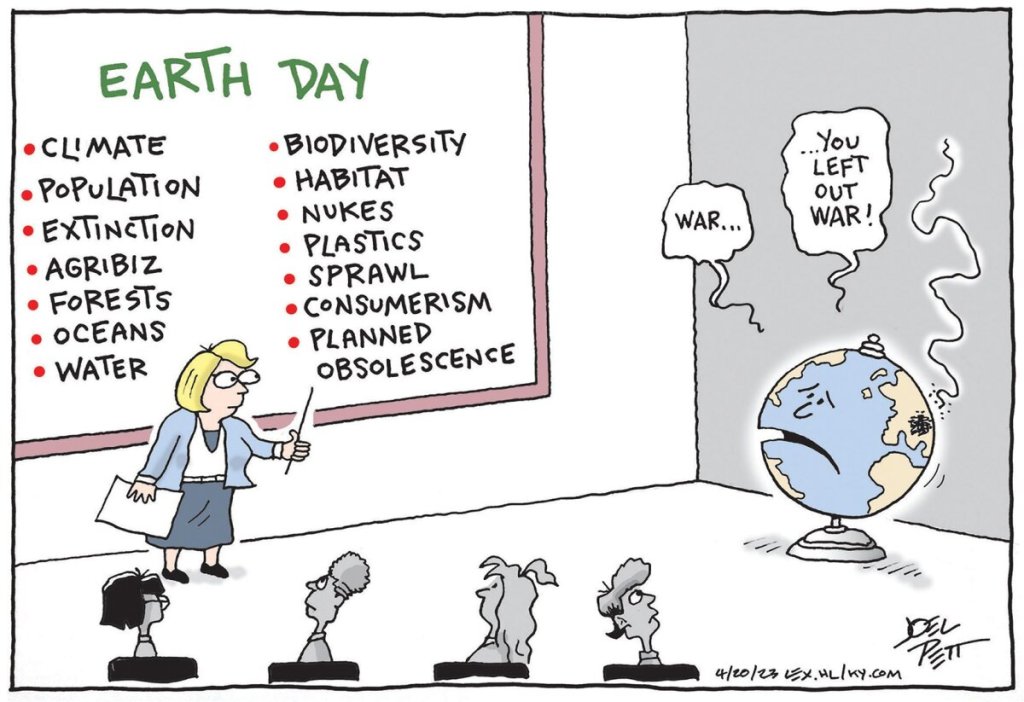
Our current ways are not sustainable. Lucky for us, we can adapt. We can follow the data and be the change we seek. Do we have the will?
I know my choice. The next iteration of this “Get off my lawn!” rant will focus on how small business owners can capitalize on the opportunity the situation presents and lead their communities to a more sustainable future.
Resources to adapt your lawn:
- Directory – Homegrown National Park
- Basics+of+Nature-Based+Land+Care.pdf (squarespace.com)
- Rethink+Your+Lawn+Factsheet.pdf (squarespace.com)
- Rethink Your Lawn | Pollinator Pathway (pollinator-pathway.org)
- Caterpillars, Butterflies & Bees | Pollinator Pathway (pollinator-pathway.org)
- Global synthesis of conservation studies reveals the importance of small habitat patches for biodiversity | PNAS
Happy stewardship!
Disclosure Statement: The author of this article has no financial position in The Scotts Miracle-Gro Company (NYSE: SMG) stock, either long or short, and has no plans to initiate any positions within the next 72 hours. This article is for informational purposes only and does not constitute investment advice. The opinions expressed herein are those of the author as of the date of publication and are subject to change without notice. The information presented in this article has been obtained from sources believed to be reliable, but its accuracy cannot be guaranteed. Readers are advised to conduct their own due diligence and consult with a qualified financial advisor before making any investment decisions.
References:
World Wide Fund for Nature. “Causes of Biodiversity Loss.” Living Planet Report, WWF, 2020, [livingplanet.panda.org/en-US/causes]. Accessed 3 July 2024.
World Wide Fund for Nature. Living Planet Report 2022. WWF, 2022, [livingplanetindex.org/lpi]. Accessed 3 July 2024.
New Hampshire Department of Environmental Services. Take Steps to Limit Air Emissions When Using Garden Equipment. 2020. [Take Steps to Limit Air Emissions When (nh.gov)]. Accessed 3 July 2024
Son, Jiahn. “Lawn Maintenance and Climate Change.” Princeton Student Climate Initiative, Princeton University, 11 May 2020, [https://psci.princeton.edu/tips/2020/5/11/law-maintenance-and-climate-change]. Accessed 3 July 2024
Roosevelt, Theodore. “Leave it as it is. You can not improve on it. The ages have been at work on it.” Theodore Roosevelt Center, Theodore Roosevelt Center at Dickinson State University, [www.theodorerooseveltcenter.org/Learn-About-TR/TR-Quotes/Leave%20it%20as%20it%20is%20%20You%20can%20not%20improve%20on%20it%20%20The%20ages%20have%20been%20at%20work%20on%20it]. Accessed 3 July 2024.
Scotts Miracle-Gro. 2023 Corporate Sustainability Report. Scotts Miracle-Gro, 2023, [ScottsMiracle-Gro-2023-CR-Report.pdf (scottsmiraclegro.com)]. Accessed 3 July 2024.
“Proxy Statement for Annual Meeting of Shareholders of The Scotts Miracle-Gro Company To Be Held on Monday, January 23, 2023.” The Scotts Miracle-Gro Company, 2023.
“2024 Has One in Four Chance at Becoming Hottest Year on Record, 99% Chance Top 5 Hottest, Says NOAA.” Fox Weather, 2024, [https://www.foxweather.com/weather-news/2024-chance-hottest-year-record-noaa]. Accessed 3 July 2024.
Halpert, Mike. “U.S. Climate Outlook for July 2024.” Climate.gov, 1 July 2024, [https://www.climate.gov/news-features/understanding-climate/us-climate-outlook-july-2024]. Accessed 3 July 2024.
Tallamy, Douglas. “Douglas Tallamy | Nature’s Best Hope | Talks at Google.” YouTube, uploaded by Talks at Google, 17 Feb. 2020, [https://www.youtube.com/watch?v=XCek-3S__js].
Homegrown National Park. [https://homegrownnationalpark.org]. Accessed 3 July 2024.
National Centers for Environmental Information. “Billion-Dollar Weather and Climate Disasters: Summary Stats.” NOAA, 2024, [www.ncei.noaa.gov/access/billions/summary-stats]. Accessed 4 July 2024.
Leonhardt, David, and Amanda Cox. “Why the Government Owns So Much Land in the West.” The New York Times, 5 Jan. 2016, [https://www.nytimes.com/2016/01/06/upshot/why-the-government-owns-so-much-land-in-the-west.html]. Accessed 3 July 2024.
Scotts Miracle-Gro. “2022 Annual Report.” ScottsMiracle-Gro Investor Relations, 2022, [https://scottsmiraclegro.gcs-web.com/static-files/a204e078-6ff4-4c3c-b33b-8c7ca17d9d87]. Accessed 3 July 2024. National Fish and Wildlife Foundation. “NFWF Announces $2.9 Million in Grants from the Monarch Butterfly and Pollinators Conservation Fund.” National Fish and Wildlife Foundation, 1 Dec. 2022, [https://www.nfwf.org/media-center/press-releases/nfwf-announces-2-9-million-grants-monarch-butterfly-and-pollinators-conservation-fund]. Accessed 3 July 2024.
 The Cultural Easton