They Will Not Fail You!
When people ask me how I learned to write I first respond,” I can write?” But in serious, after that moment of self-doubt-deprecation-and-deflection, which I suspect will never go away I tell them I have two answers.
10,000 hours. The first is about the real in writing. My guess is there are no short cuts, although history shows us that a few get lucky. For the vast however we must do the work, and the work of learning is overflowing the hard drives on my Mac and spilling over into the Dropbox cloud. In 2013, my band and I began writing an album that would be called The Forever Smile. It started as a collection of songs and soon became a story of sorts told via music with characters both good and bad and a plotline about a destroyed planet with one last bastion of unspoiled life support, nature that is. Both the good and bad characters were making their way to this last sanctuary, albeit with polar aims.
Why not make it a book I thought, and I began writing, and failing, and scraping, and screaming. Seasons passed, and my two cats sat dutiful watching and thoroughly confused until eventually I had a three-part series. I wrote other books too, and a few screenplays, but none were quite ready to go as they say, although I did pitch the YA cli-fi series to a wealthy Greenwich-ite. It was a weird event, as inherited money oft is, quite funny in hindsight, and a story for another time. This was my million-word period, because that’s what it took, to learn the craft, or at least get to the beginning.
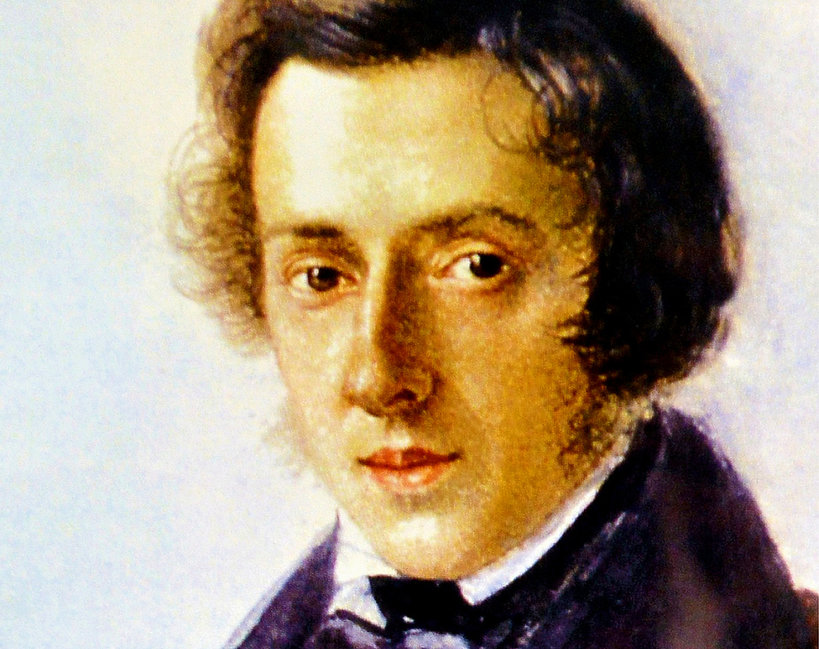
The Classic Curveball. The second answer of how my writing journey evolved is slightly more abstract, at first. Classical music. I joke that I write to Chopin and edit to Bach, except I’m not joking. That is how I write, whenever possible. The reason this works for me has become increasingly clear. There is simply a wealth of information, and emotion, in classical music, and it’s there for the taking. Think of the stories these great composers were able to tell, hundreds of years ago, and without the use of modern technology. Think of the history they were around for: the tectonic period of humanity’s formations, great atrocities and accomplishments birthed and dying side by side. There’s a reason they’ve stood the test of time and it’s the same reason a classical score makes a good movie great. I’m hoping it can do a little something for my books ….
Find the Good Vibes. Music is language, a collection of vibrations no different, in many ways, than a conversation, at least, that is, in terms of elements. Victor Wooten breaks this down wonderfully in his epic book, The Music Lesson. All communication/music shares elements like tone, volume, pace (rhythm), timing, space, and so on. Have you ever had a bad conversation? Someone screaming at you in a loud bar? Or leaving no room for you to talk? Well, have you? COME ON ANSWER!! It’s dissonant, it’s abrasive, and like the cap-locks crusaders on social media, it affects you. When we talk about the feedback loop we want to consider it in terms of everything we expose ourselves to, especially diet, music, and people. If mindfulness gets us in the moment, it is in this moment that we can recognize what we are surrounding ourselves with and what those surrounds contribute to our mana (I’m using this term to refer to our life force or power, the thing that our practice is designed to turbocharge). I’ve found that enveloping myself in classic music is beneficial to my creative process and my creative process is therapy of the soul. Like the music itself, it heals and if Victor is right then music, like surgical lasers, is a vibratory force that can.
Water Music. Ok, that’s Handel, but it’s how Chopin feels to me. When I’m writing with Fryderyk, it’s like I’m a leaf floating down the stream weaving around rocks and dropping down waterfalls. Sometimes I’m blown by the wind, and sometimes the waves are crashing. The music is contemplative, thoughtful, the changes swift or subtle, and it’s packed with information. It flows between harmonious, teases at dissonant becoming dark before transitioning once more to light and airy. Bach is cutting, sharp and quick, always moving in a vainglorious boast that speaks of the arc of worlds and man alike. Our beginning, our end. It forces me to think deeply about the seriousness of what I am trying to do. And make no mistake, Art is indeed a heavy and purposeful term. I don’t pretend I’m trying for anything less, so I ride with the timeless. Many other composers blend in, each with a varied tether to the original choice, and that’s why I like to use Pandora for this approach.
Jerry Garcia described Classic Music wonderfully in talking about how it inspired the timeless work of The Grateful Dead, through its entry point, Phil Lesh. Paraphrasing, Garcia described the orchestra as a hundred musicians all chasing one another, falling, jumping up, breathing, alive apart from the individual. I loved this imagery.
If you are amid, or planning, a creative project, I hope you’ll give this approach a try. And, if you become a convert, I’d love to know who you decided to ride the wave with!
DISCLAIMER: This article was written to Nocturne No. 2 in E Flat Major by Fryderyk Chopin.
Be Good to Yourself,
Ken
For more on The Classics, follow Instagram: @DailyHereandNow

