How many likes did you get on that post?? How many? Check again, how many?
The digital age is full of trickery and if we could step back, we would see that for as much as technology has delivered for us, connected us, and solved problems, there are a lot of failed promises. Whilst a book could be filled with those failed promises and the laptop I’m writing on is currently belching the familial stink of manufactured obsolescence, the subject for today’s article as about the race to engagement.
Pavlov’s Post Monkey. We’ve been trained alright. If someone posts on social media from the toilet and no one ‘cared’, did they wash their hands …. Ok, sorry for that but I hope I made my point. Many of us building via social media or simply coming up in the world have been trained to post for engagement and that the feedback on social media, from often anonymous and mostly unknown sources, matters. We’ve become locked into this cycle of needing the adulation of the digital crowd and no one is immune. Some of the most powerful people on the planet crave these fleeting hits of dopamine. And yes, there’s an underlying bio-chemistry to our addiction to social media feedback, but it’s not a good one.
Dopamine Nation. Dopamine Nation: Finding Balance in the Age of Indulgence is a book my Stanford Psychiatrist, Anna Lembke focusing on the addictive qualities of social media and how they can overload our natural need, and the impact of human connection. Social media addiction can lead to depression, hypertension, anxiety, and a whole lot more. [1]
While Lembke first points to abstinence or at least periods of it as the cure, let me put forth the idea that a mindfulness practice like The Daily Here and Now can help too.
Discipline, Recognition, Return to What Works. The Race to Engagement is yang side of the feedback loop. Instead, let the Earth be your witness.
An especially important lesson in the age of digital morose and ubiquity, but not just for social media. These are words to live by. Taken from buddha, this is an important lesson in humility and happiness. Do not do anything for the admiration or congratulation of other. Do it because it is right. Do it because you must as in movement or art. Do it because you are alive. Let the earth witness your acts and move on to the next one. Keep going, live satisfied and you may end up being a much bigger inspiration to others than you ever intended, but this must be an innocent byproduct if it is to ever bring you happiness. Happiness is the act of doing the right thing for ourselves, others, and the earth, and not waiting for (or expecting) feedback. For the happy are too busy with what needs doing next.
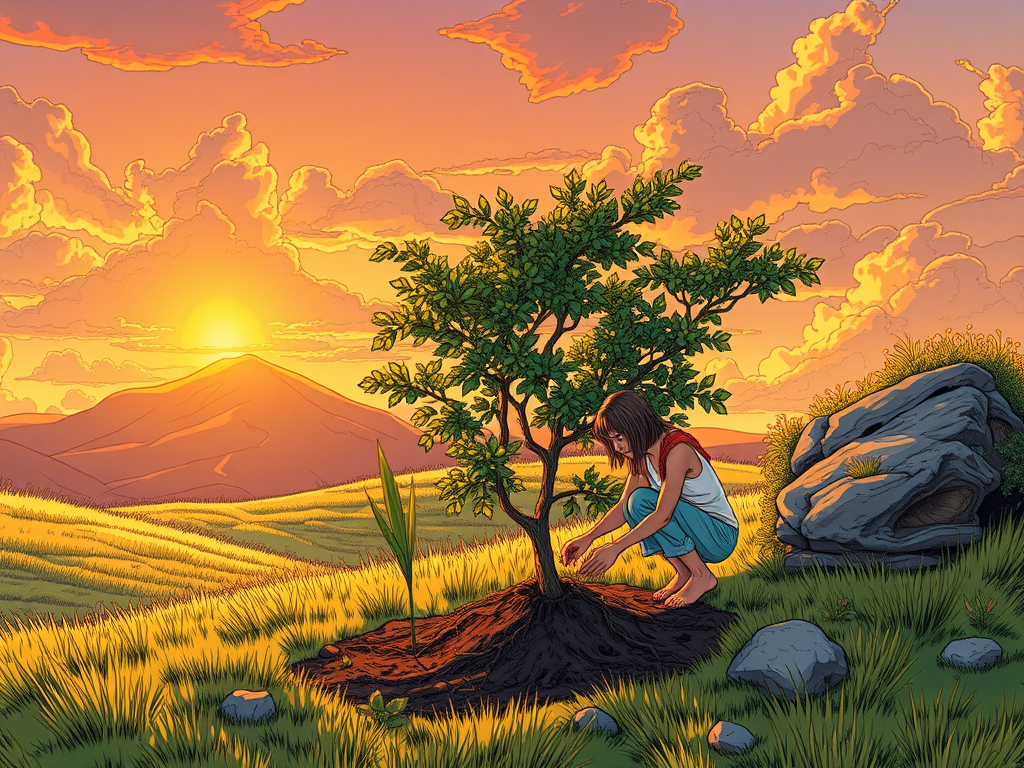
One Who Plants a Tree. It’s a great quote, powerful, short, and to the point. “The one who plants trees, knowing that he will never sit in their shade, has at least started to understand the meaning of life.” – Rabindranath Tagore. The practice of tree planting is also equated in other quotes to hope. I love these as great metaphors for living a good life.
Support life, do not wait for feedback. Another paraphrasing of a Sadhguru lesson. “If what we are doing is significant for the life around us, the opinions of others do not matter.” This speaks to staying grounded in truth and doing what’s right. The feedback that matters will manifest itself in our hearts, minds, and bodies. There will always be detractors, ‘haters’, especially when you are doing good and supporting life. Does this matter? Can someone truly have a good reason not to help those less fortunate. We could a lifetime and search to the end of the universe, and still not find a reason to criticize compassion. Keep going, do more, there is always more good to be done and the dividends of doing good pay back directly to the soul and spirit.
This is a good way. The discipline to let the earth alone be our witness. The recognition of why we are here and the ability to use tried and true methods in our practice or when we slip. If you have these three, post away, or, better yet, go outside.
Be Good to Yourself,
Ken

