“The bad news is you are falling through the air, nothing to hold onto, no parachute. The good news is there is no ground.” – Chogyum Trungpa
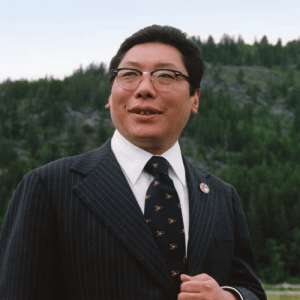
Trungpa was a Tibetan Buddhist meditation master who’s foundational teaching was about our basic goodness. His words were the first that resonated deeply with me on this journey and hence I use them in my sign off for this column saying as much to myself as to you: be good to yourself. I figure if I write them enough, I’ll eventually listen. Let’s dive a little deeper.
The fundamental starting point, oft referenced by Trungpa is that basic goodness is innate, we are all born with it and carry it with us. By contrast, the ego must be formed and once formed it can cause us all sorts of trouble. Think of the state of the world, all human problems. Now remove ego and consider the effect. A powerful thought experiment but a large one. Possibly considering this condition in our own lives might help.
Trungpa says: “Before the ego is formed, … there is a basic openness, basic freedom, a spacious quality, and we have now and always had this quality.”
Think of a child and his or her natural wonder of thing. Their ability to laugh, their reflection of smile and joy. This is real, no. We call it innocence, but Trungpa calls it basic goodness, openness. Before we are taught to cherish self-importance, to be prideful, we are open to the beauty all around us, in wonder of it in fact. We are full of love, colorblind indeed. We are basically good.
This intrinsic goodness exists always in all of us and it should be the basis for our spiritual practice or mindfulness practice Trungpa tells us. It survives societal conditioning though, if buried, it must be sought, cultivated, rekindled. But it must first be recognized, then, meditate on it.
Recognizing our basic goodness gives us confidence that we are complete and the ability to recognize the basic goodness in others. This recognition allows us to see and be truth and authenticity more clearly. Fearless but gentle is the way says Trungpa. Openness and integrity are the fruits of this practice, a good life. In our daily work, relationships and beyond, this recognition is how we give ourselves a good life, and how we return to it when we stray. And we will stray.
Unless we are truly a monk, we are constantly barraged by things, products and services, lifestyles, examples of self-importance and better than. These are the sugar to the unhealthy components of ego. All sickness requires food. And all absolutes come with caveats.
Widening the lens on modern philosophy we may come to understand the ego is not all bad. To function in the world, ego helps us navigate relationships, make choices, and solve problems. The problems occur when we are given a false sense of separation from the world around or succumb to an insatiable quest for more. Here ego can lead to conflict, self-centeredness, suffering, and even destruction. There are too many examples in modern life. Ego run amok impedes happiness, a good life, and it buries our basic goodness. The key is to cultivate a sensible relationship with the ego.
This brings us back to our practice of mindfulness, part of our toolkit of a good journey. Please, Trungpa, please give yourself a good time:
“We have to learn to be kinder to ourselves, much more kind. Smile a lot, even though no one is watching. Listen to your own brook, echoing yourself. You can do a good job. In the sitting practice of meditation, when you begin to be still, hundreds, millions, and billions of thoughts will go through your mind. But they just pass through only the worthy ones leave their eggs behind. We have to leave ourselves time to be. You are … not even going to survive unless you leave yourself a minute to be, a minute to smile. Please give yourself a good time.”
Maybe it starts by saying to ourselves—I am basically good. You are. I’m smiling now, how about you?
Ken
 The Cultural Easton