Adjust Your Aperture, Adjust Your Life
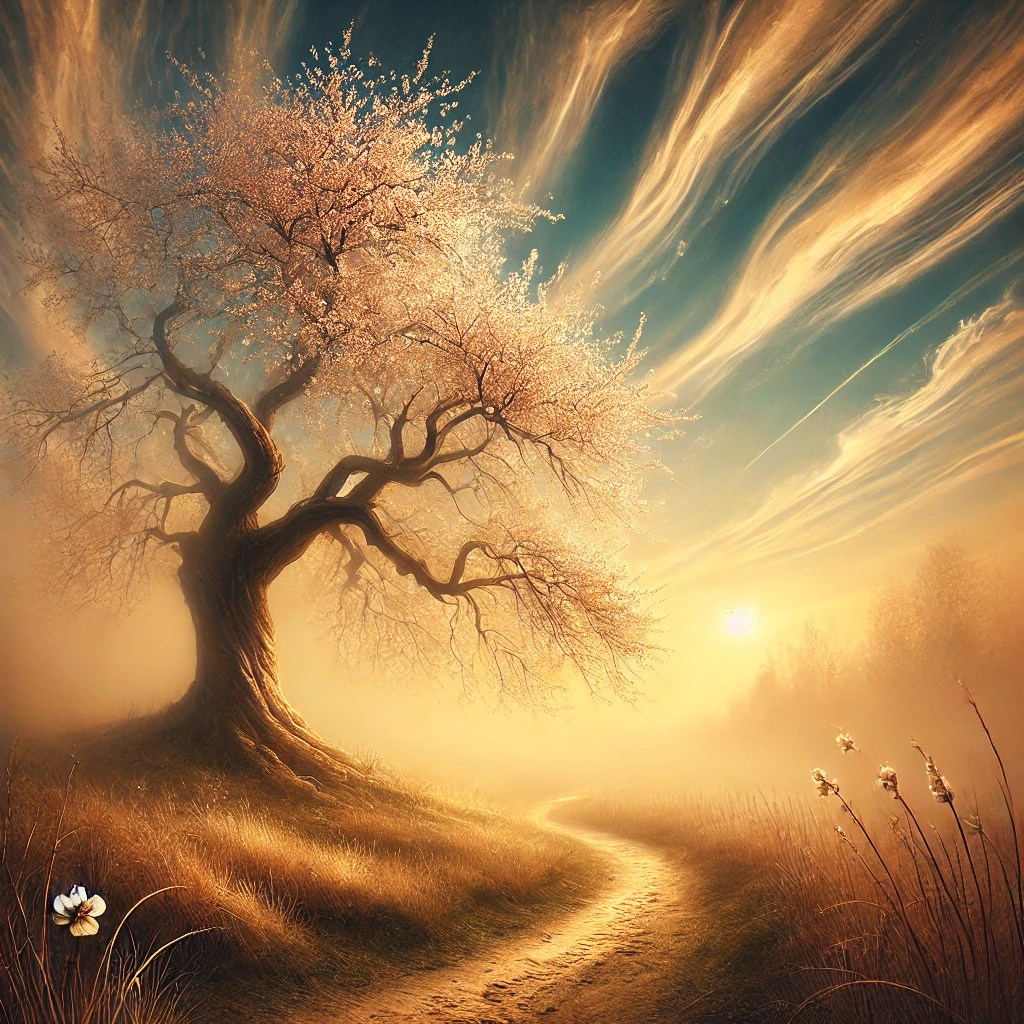
The natural world, the changing season, the beauty of the cycle of life. We must have focal points at the ready when the harsh realities of life pull us astray and make us anxious and fearful.
The realness of harsh realities aside, they will not last. Nothing will. We will not last. The Daily Stoic has been hammering home this message in part by quoting a beautiful poem about spring. The most beautiful season reminds us of many things but often lost is the fact that the trees, like us, are getting older. One more spring means one less, and one spring will be our last. What will we focus on then?
Life is about clarification in a way, reminders, the biggest of which is that it only occurs in present moment. There are miracles all around us and, even in darkness, still, there is beauty. This does not me we ignore the atrocities of the world, that we are not active in opposing the bullies and oppression but let us not forget the finite and quick nature of life, the gift. Let us center ourselves first and foremost.
I’ve needed this reminder lately. Like many of you, my thoughts have been scattered, the energy sapped, my indecision and negative emotions amplified by our acute moment in history. I am reminded often of the Carl Sagan quote, and there are a great many to choose from. One has stuck with me and returned as a reminder again and again:
“Don’t sit this one out. Do something. You are by accident of fate alive at an absolutely critical moment in the history of the planet.”
It’s true you know, and Carl was referring to the environmental factors that sustain life and stable society, but a good number of other existential crisis exist. We need to do something and as much as it may seem we backslide there are those making quiet, steady, and resolute progress. Be one.
But this doing something does not happen all at once. And it won’t happen at all until we focus first on ourselves.
Like the passing of the seasons and the aging of our bodies confirm, embracing our impermanence (we will not last) is a good way to set the stage for growth and transformation. This is one of the lessons from the great Vietnamese Zen Buddhist, Thich Nhat Hanh. Of all the guides I’ve found, Thich was the first one to extensively and deeply discuss death as a clarification for life and even, incredibly, a source of joy. If you must die, then you must be alive!
Beyond bringing us to the present moment, recognizing death allows us to recognize our interconnectedness. Thich uses the analogy of the metaphor of the changing, morphing, and dissipating, but never disappearing cloud to elucidate impermanence. We return to the earth to nourish it the way the cloud becomes rain. Once we realize we are connected to the planet, a part and not apart from it, protecting it is a no brainer. This recognition helps us let go of attachments, especially material ones achieving the dual goal of a lighter spirit and a lighter footprint.
“Walk as if you a kissing the Earth with your feet.”
This is mindful instruction to walk with love and gratitude and respect for the gift of life, the gift of connection, the gift of death. Wow!
This notion of a joyful view of death and embracing emotions like sorrow were hard to process at first, and, like always, I am writing about them in a sense to learn and understand them better. But these and other teachings proved themselves to me when the inevitable specter of death visited us last year. My father died in February just before my second son was born. My friend, just 50, would die two weeks later . My son was born in my bed next to me the next morning (h/t rockstar wife). Death, juxtaposed against new life. It should have wrecked me but it didn’t. Both times I was able to pause and breath. I went outside and moved. I touched the earth and walked. I noticed the vibrance and resonance of the world seemed turned up. I talked to my friend and to my father and I watched the clouds wisping away overhead, changing, morphing, and dissipating, but never disappearing.
These lessons help me, and maybe, they can help you too. When we embrace our impermanence, we will be ready when the moment come to do something, whether that be in celebration for the passing life of a loved one or becoming a ripple that joins the wave that changes the world. Each of these moments will come, maybe sooner than we think and if we are doing what is right, then we have nothing to lose.
Be Good to Yourself,
Ken
 The Cultural Easton