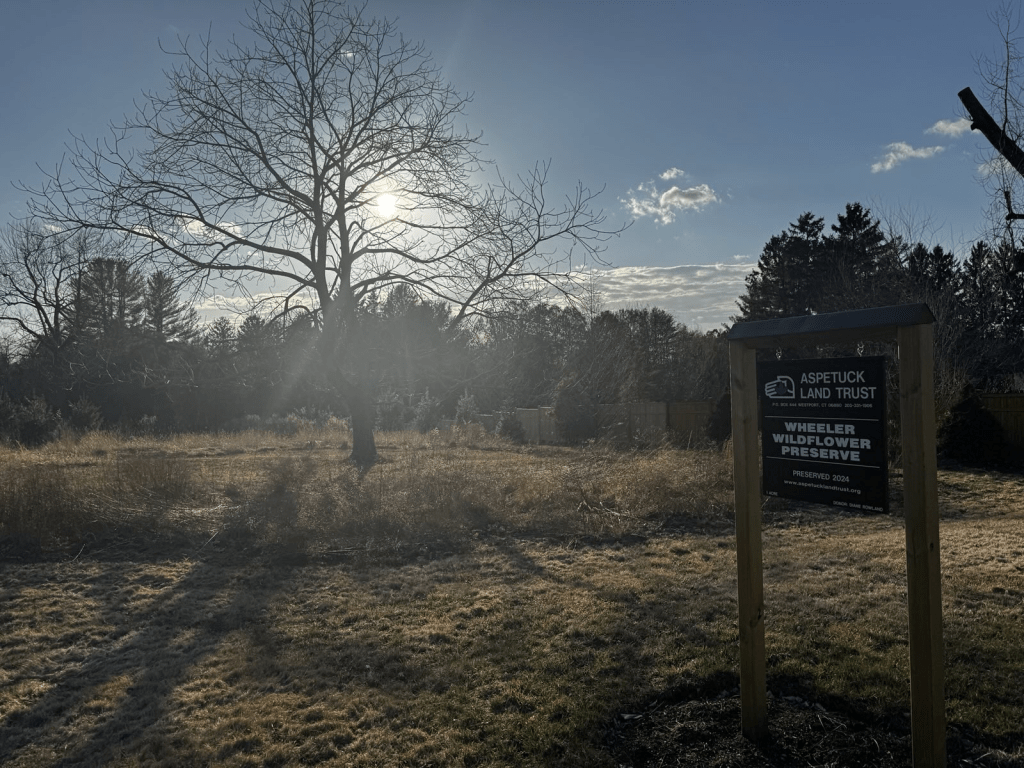
Easton is known for its open spaces—but mostly in Upper Easton. Lower Easton, however, has its own little gem. The Wheeler Wildflower Preserve is one of the Aspetuck Land Trust’s newest properties. Located on Sport Hill Road, near the blinking light at Beers Road, it was preserved just last year in 2024. At just under an acre, it’s one of the smaller open spaces in town, so you won’t need a map to navigate. But that doesn’t make it any less worthy of your attention—or your presence.
I’d long looked at the parcel with curiosity, as one does with undeveloped land in Lower Easton. When I saw the Land Trust putting up their sign, I was thrilled. Before that, I’d assumed a private homeowner was embarking on a personal rewilding project.
In truth, Wheeler is a quiet example of something revolutionary: letting land be. It shows how we can reduce the size of our lawns, not with neglect but with intention, like path mowing, which creates a welcoming space for both people and pollinators. Little undisturbed patches like this are gold for migrating birds and insects. And they serve as living reminders of what’s possible on our own properties, even with houses and driveways in the mix.
As spring arrives and the drone of handheld lawn devices cuts through the quiet (to the chagrin of those working nights), perhaps it’s time to reconsider how we care for our little parcels of creation. The white picket fence and manicured lawn have long been symbols of the corporate-sponsored American Dream. Toss in some rose bushes and ornamental shrubs, and it’s nearly a scene from a vintage commercial trying to sell you milk or cereal.
But what those ads don’t say is that monoculture lawns are biological dead zones. Maintaining them pollutes the air, adds noise, and if fertilized, sends chemicals into the watershed. Despite what lawn care commercials might suggest, a golf course-perfect lawn is not ideal for the planet.
The U.S. has around 40 million acres of lawn. And while grass and soil can sequester carbon, the emissions from gas-powered lawn equipment cancel out those gains. Small engine lawn tools also contribute to ground-level ozone, which harms those with respiratory conditions, especially children and the elderly. With increasingly unpredictable rainfall patterns, a lush lawn usually means lots of watering.
So, what should we do with a little spot like Wheeler?
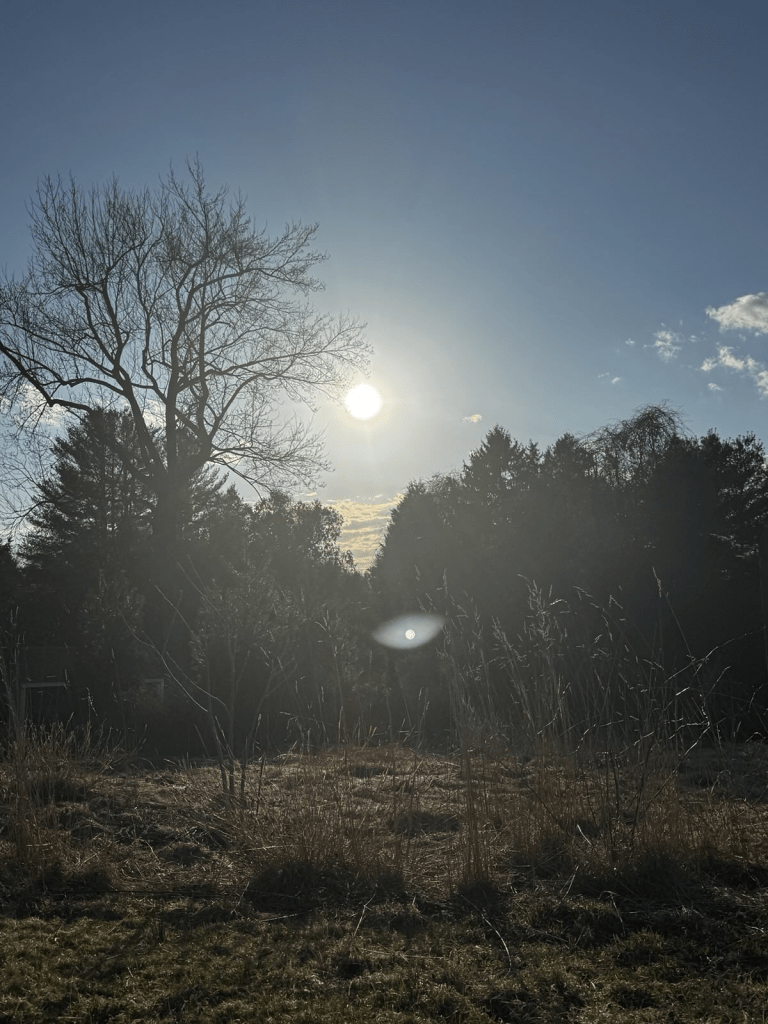
Sit. Listen. Look.
This isn’t a preserve for hiking miles or conquering peaks. It’s a place to slow down. To notice. To sit with a tree—not even necessarily under or against it—and ask what else might be going on here. To connect on a deeper level.
This place rewards stillness. The longer you stay, the more you’ll notice: the breeze moving through layers of leaves, the low hum of insect life, the shifting shadows that remind you the sun, too, is in motion, hurtling through the universe with our home rock in tow. If that makes you dizzy, fear not, grab hold of the roots of the walnut tree and enjoy the moment. You may not find what you’re looking for, but you might find something you didn’t know to seek.
I’ve made it a habit to stop by and sit quietly. Sometimes with my son, but usually alone. No agenda. Just presence. And in that stillness, I’ve started noticing synchronicities—those quiet little nudges that remind me I’m paying attention.
Not every open space needs to be a park. Not every walk needs to be a workout. Sometimes a meadow on Sport Hill Road can be a sanctuary. A whisper from the land. A pause that refreshes—not in the soda ad sense, but in the soul-deep, reorienting way we don’t get enough of anymore.
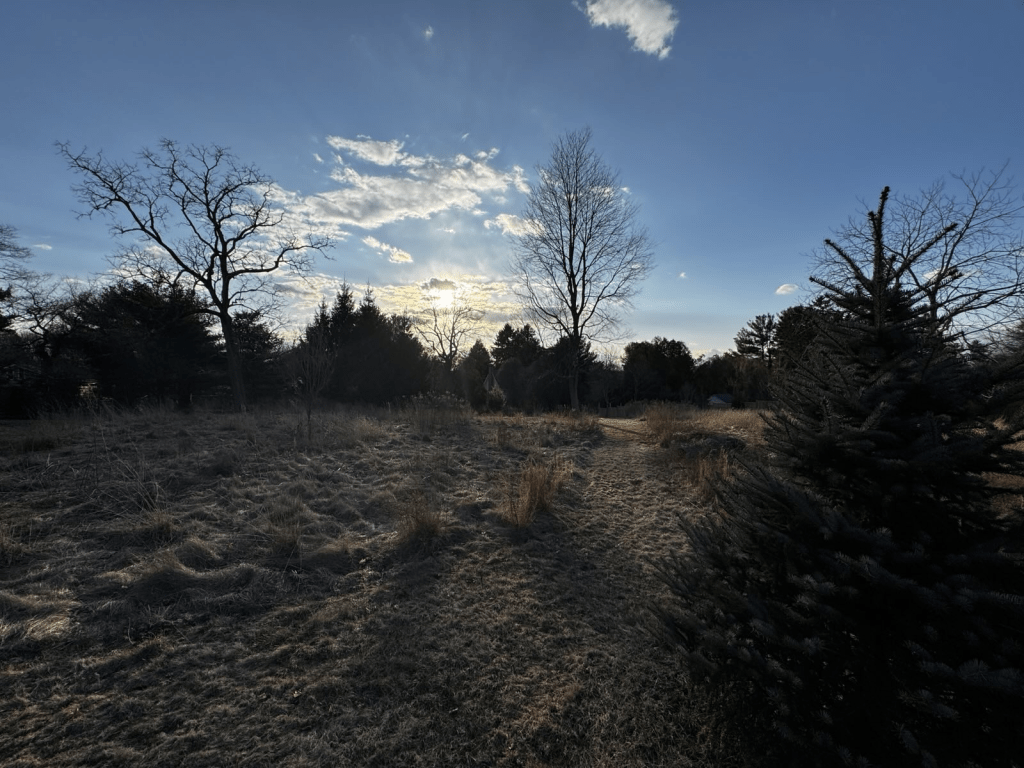
Golden hour is a particularly magical time to visit. The sunlight filters through the trees and grazes the tops of the dried grasses, casting everything in warmth and hush. It’s a reminder that light changes things, what felt ordinary in passing can suddenly feel sacred. You just have to be willing to see it that way. So, whether you’re heading home or simply out for a loop around the neighborhood, Wheeler’s is worth the detour. Bring a thermos. Bring a book or journal. Or just bring your breath. See if anything stirs. You never know what kind of synchronicity might be waiting for you in the waning light.
 The Cultural Easton