April is known as Earth Month, and Easton has long been known as an Earth-focused community. Our town is shaped by its unique relationship with the reservoirs that supply clean drinking water to our neighbors. Residents have long cherished Easton’s role as a watershed town for the region. Our soil filters the rain. Our farms grow nutritious food, preserve open space, and serve as a living reminder of our shared heritage.
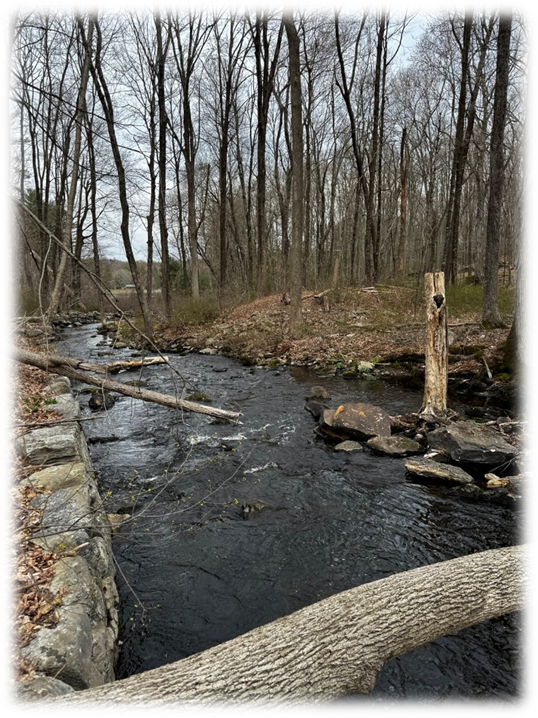
But, as we celebrate Earth Day on the 22nd, we also know we are at a pivotal moment.
For decades, the idea of conservation, or – more recently, sustainability, guided efforts to protect the watershed and reduce the town’s environmental impact. Many of us remember the phrase “reduce, reuse, recycle,” introduced on the very first Earth Day in 1970. It raised public awareness, and it still applies today. But as the planet struggles under the weight of too little reduction and too much extraction, a new awakening is emerging. One grounded in the science of living systems and the wisdom of old traditions.
Sustainability looks to maintain the status quo. Regeneration aims higher. It aims to heal, grow, and evolve. If that sounds familiar, it should, because all known living systems in nature are regenerative by design.
Systems scientist Sally Goerner uses the term “regenerative dynamics” to describe the way living systems develop and adapt through circular flows of energy and materials, through diverse and distributed networks and nodes, through feedback loops, learning, and renewal. These systems don’t just bounce back; they grow stronger through disruption. Progress spirals upward and resiliency is built in response to stressors.
By contrast, degenerative systems break down faster than they can repair. After 55 Earth Days, we see the flaw in relying solely on a sustainability framework: it tries to support a system that is already degenerating. It’s no longer enough to sustain. The Earth, and civilization itself, needs a chance to breathe.
Sadly, too many human systems are still degenerative: extractive economies, throwaway culture, fast fashion, social fragmentation and massive leisure emissions of the global elite. Regenerative thinking flips the script from minimizing harm to creating the conditions for life to thrive.
One simple way to see this in action is to take part in the town’s “No Mow May” initiative. By leaving nature to its own devices, regenerative processes reveal themselves as seeds distributed by mother nature sprout. A healthy system, whether it be a forest, farm, or community, is one that regenerates itself. The concepts behind regeneration are not abstract. They happen when a farmer builds soil instead of depleting it. When a protected forest becomes a place of both natural ecological processes but also human belonging. When neighbors share resources like power tools instead of everyone buying their own. Or, in the case of a successful “No Mow May,” when homeowners allow native wildflowers to take over a manicured lawn.
But all of these start from one principle, that we, along with our technological inventions, are not separate from nature.
Growing academic research shows that our spiritual connection with the natural world is essential, not only for our mental and physical health, but for any truly regenerative society to take hold. If you’ve felt overwhelmed by climate change or a sense of grief for the world we’re losing, that sorrow comes from your connection. All over the world, people are waking up to this deeper truth. If you can’t tell, I count myself as one of them.
As Francis Weller writes in Choosing Earth, “Our long apprenticeship with sorrow results in a spaciousness capable of holding it all—the loss and the beauty, the despair and the longing, the fear and the love. We become immense.” From this vulnerability, something transformative happens, we feel our connection with the wider world expanding.
When we expand our worldview, new possibilities present themselves. These feelings, when nurtured, can allow us to escape the current degenerative paradigms of materialism and reductionism. We become aware of our role as the shapers of society on this new emerging and regenerating Earth.
Easton is well positioned to lead in this awakening. With nearly 1,800 acres of state forest, 589 acres protected by the Aspetuck Land Trust, and 900 acres of farms and open space, we are surrounded by land that remembers how to live. When we walk the ALT trails, plant native wildflowers, or simply pause in the stillness of a rainy morning in a preserve, we don’t escape the complexity of the world. Rather, we’re participating in its regeneration. We’re reconnecting with our deeper soul.
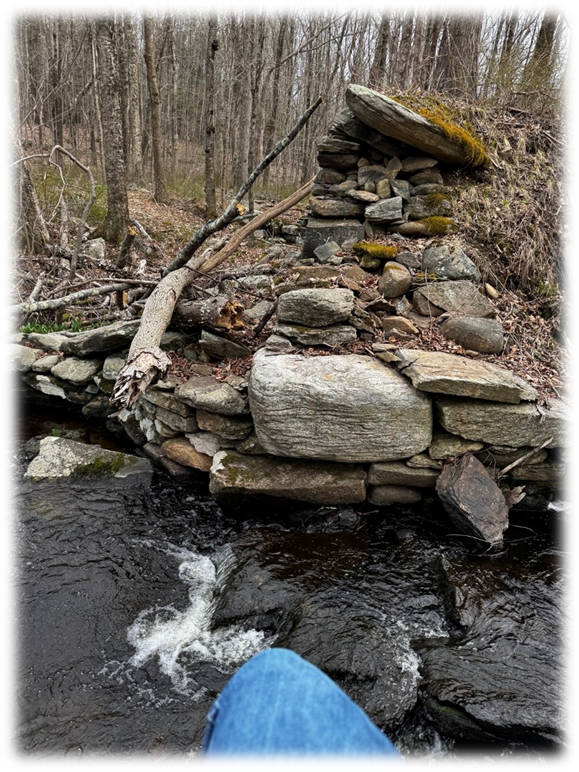
The noise of modern life is not who we are. It never was.
The world is an increasingly dark and complex mess, but light remains. It stays in places near which we are blessed to live.
So, this Earth Day, try to get outside. Go into the woods and find yourself. There is light streaming through those trees, just waiting to show you things from a new perspective.
See you on the trails.
 The Cultural Easton