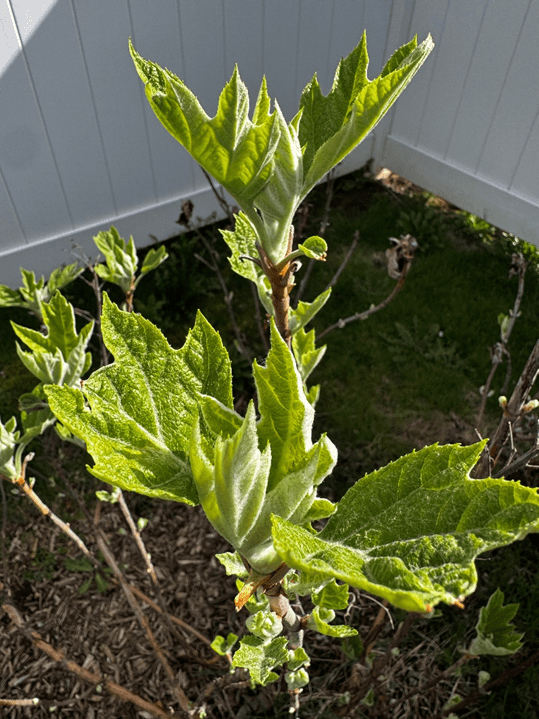
Spring has sprung — at least in the meadow outside the window. Even though we’ve been doing this ‘gardening’ thing for a while, there’s still a sense of worry about what may not have survived the winter.
As spring arrives, the native perennials come back slowly, then almost all at once. The winterberry, pin oak, and even the high bush blueberry shrubs have all burst forth in new life. With them comes relief from the cold and dark winter afternoons. All over town, magnolias, forsythia, azalea, red buds and cherry blossoms signal the arrival of spring. Electric blooms thrill the senses as one strolls through town. Neighbors reacquaint themselves after a long winter without the shared joy of gardening in the soil beneath the warm spring sun. It is a time of renewal.
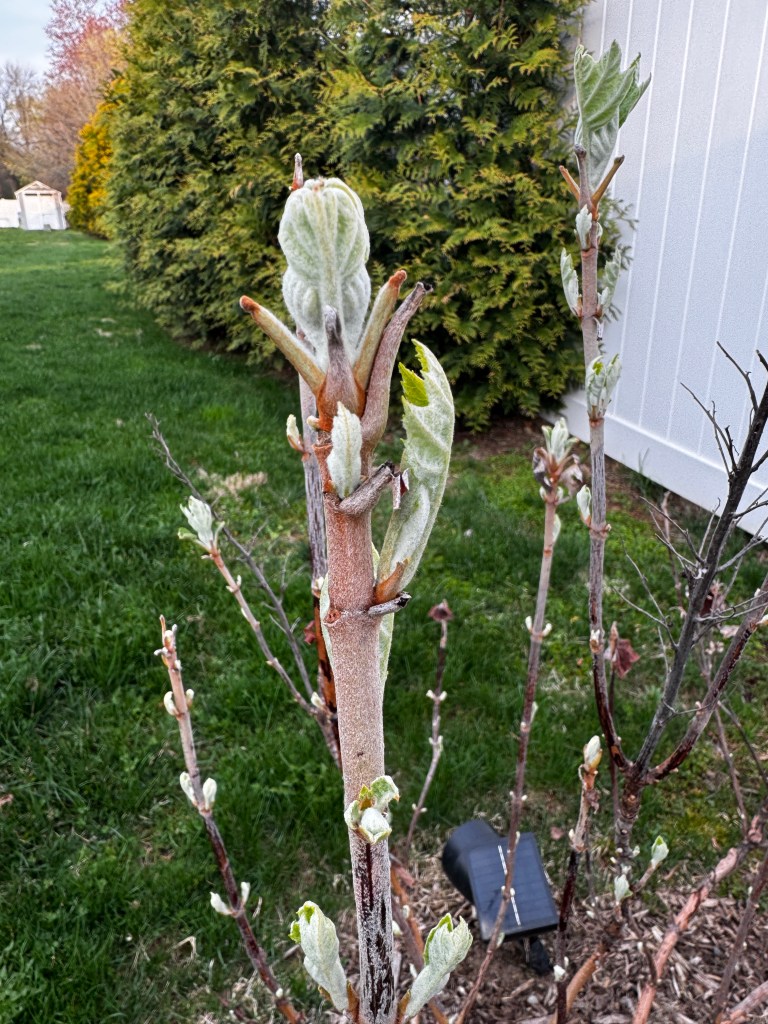
Patterns alike but distinct, plants blooming offer the observer many points of view. For example, the oak leaf hydrangea blooms in a way that almost makes it appear to shoot leaves up and out of its stems. The first buds appear small but then grow ever larger as they erupt to greet the sun. The silverish-white of the underside of the leaves give way to the stunning green on top. This plant operates as a finely tuned system. Each of the leaves has a job to do, and it will grow to the exact size needed based on the available sunlight to the plant. An oak leaf hydrangea in the shade will have larger leaves than a comparable plant located in the sun. From each, according to need. In reciprocity with the surrounding environment. A wild idea, in a civilized world.
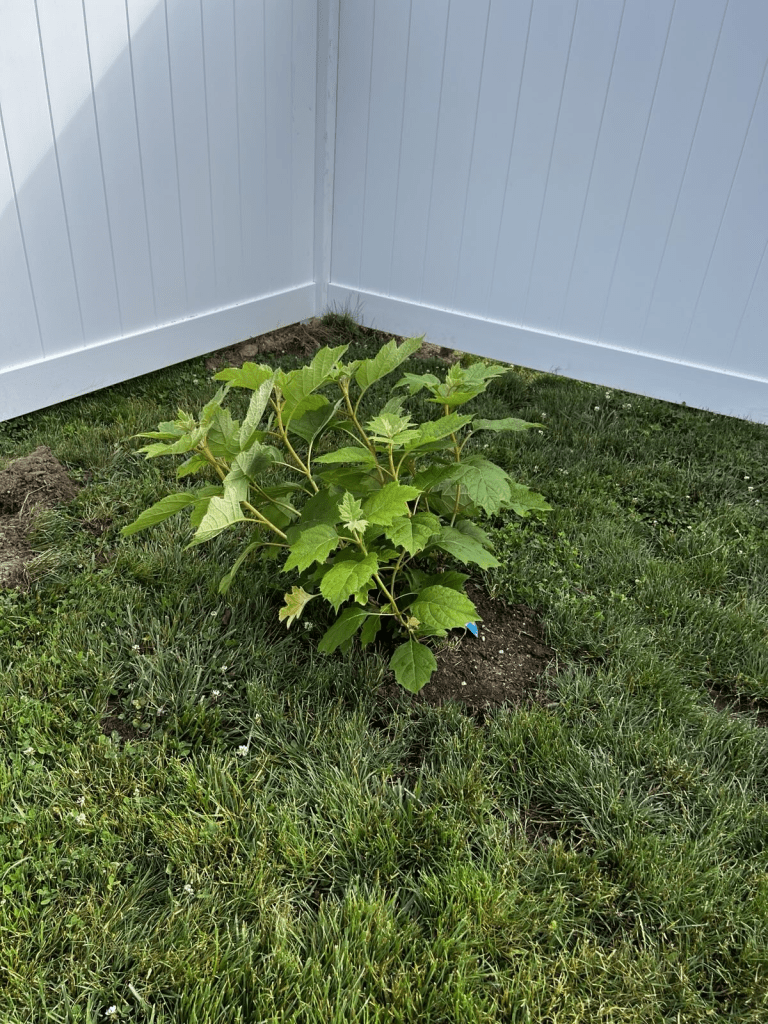
This plant came to Easton via the Aspetuck Land Trust’s native plant sale in June of 2023. Since then, it’s become a hub for pollinators, especially beetles and bees, and a source of creativity and wonder for the kids, and for me.
I am after all writing an article about this sentry to our backyard.
A solar-powered – spotlight is even aimed at the plant for the epic shadow patterns that it casts on a nearby fence. Ecosystem services in the form of an art show!
A few minutes spent admiring the plant, and then here we are readers, bonding over that moment in time.
Another welcome sight returning was our highbush blueberry shrubs. The soil needs amending to lower the pH, but that didn’t stop the thought of blueberry pancakes on the grill on summer weekends. These shrubs, strategically located in proximity to the grill, also serve as the anchor to our wilding project, our ‘Victory Meadow.’
The term is a play on the ‘Victory Gardens’ that the National War Garden Commission promoted during World Wars 1 and II. The gardens were advertised to support the troops. Food you grew at home meant the farms could focus their efforts on getting produce to the military. Gardening was therefore extremely popular. By the end of World War II, almost 40% of the country’s produce was sourced from a garden.
While the hydrangea plant isn’t in our garden, it is close enough to provide a welcome stop-off point for the bees on their way to pollinate the tomato plants. Here, in the corner of our backyard, we like to think it serves almost as a truck stop for the pollinators destined for the garden. This weekend, it served as a source of inspiration and awe. There was church, soccer, and things to do, of course, but that only meant it was even more important to welcome the return of this anchor plant. To spend a few minutes looking and listening and getting to know it once again.
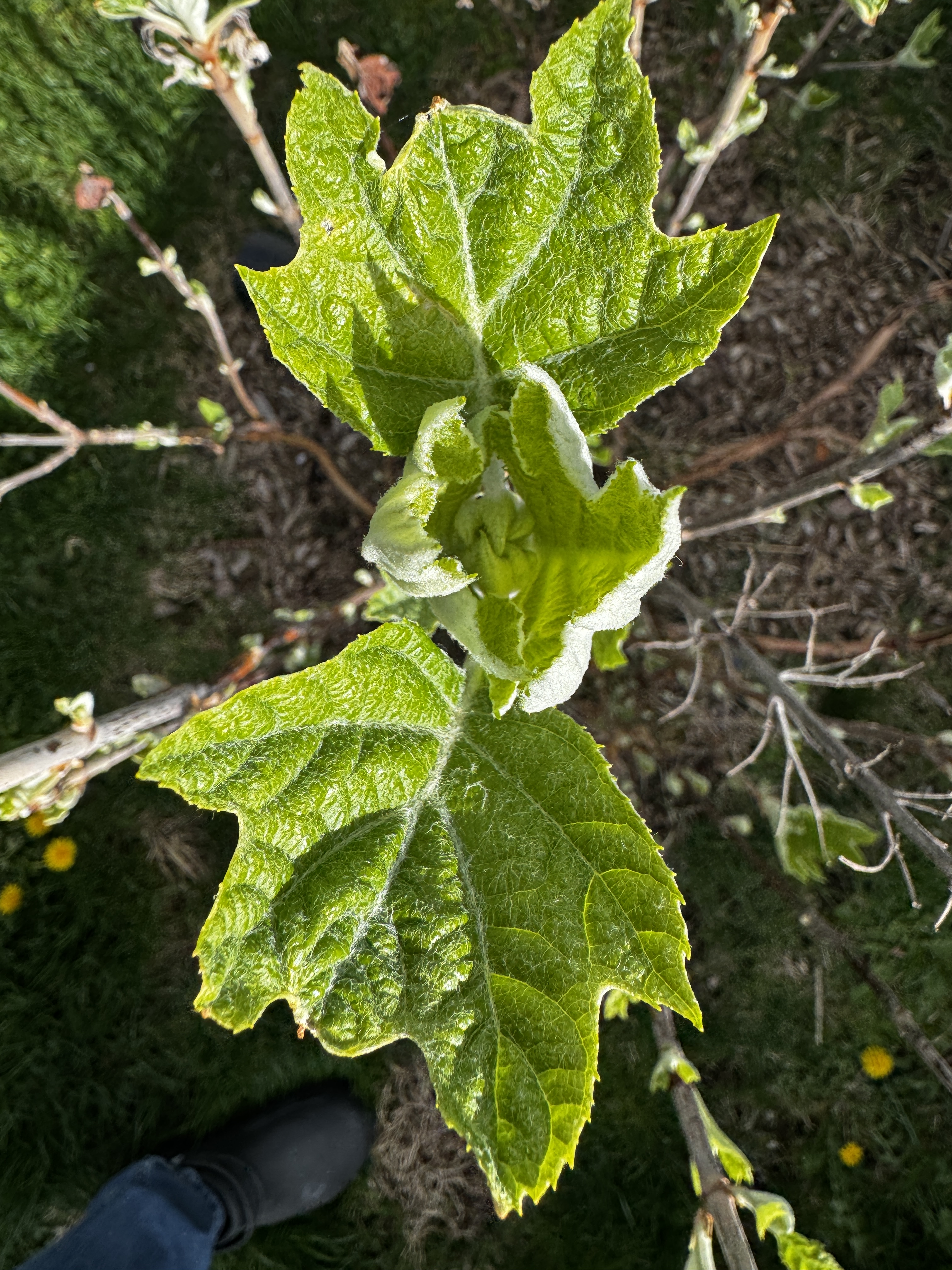
The fuzzy white hair on the leaves gives them a soft feeling, and the intricacies of its veins are a reminder that it too is alive, just as much as the observer. The plant is drought tolerant because of the remarkable efficiency of its vein structure. The white fuzz even plays a key part, creating a microclimate for each leaf by trapping some of the evaporating moisture.
As the hydrangea grows, we’ll give it room to expand. In the opposite corner of the yard, the decaying stump of a tree is a source of play for the kids, and as mulch to further reduce the size of our manicured property. The oak leaf hydrangea blooms and inspires me to write. Therefore, in reciprocity I give the plant more space in which to thrive. I soak the plant deeply only when needed with rain harvested in barrels, and the arborvitae nearby provide shelter to the birds that visit this hydrangea’s corner of the planet.

 The Cultural Easton