The sun was already sharp by mid-morning, casting hard shadows across the beds as I knelt to tuck red and green bell pepper plants into the soil. The hum of birdsong carried over the neighborhood, and a light breeze whispered through the taller grasses. Just enough wind to stir the air, but not enough to cool it. Sweat was beginning to bead at my brow, and I had to step back inside to grab a baseball cap before tackling the next task. The heat wasn’t going to let up for another two days.
With the peppers planted, I turned to a different kind of gardening, one that wasn’t about putting something new in the ground, but about stewarding what was already there. Our highbush blueberry shrubs, which had begun to establish themselves in the meadow, were struggling against this season’s surge of grass. The lawn had begun to creep in, quietly and then aggressively ever since no-mow May. If left unchecked, it might choke out the blueberry shrubs, stealing water and nutrients, and making harvesting their fruits more difficult.
The day’s efforts were about more than maintenance. It was the next evolution in turning a lawn into a landscape that serves people and the planet. A place where native plants can thrive with less mowing, fewer inputs, and more joy. A place where, ideally, the land and the people who tend it are both a little more at peace. Under the eye of a now six-foot Joe Pye Weed, I laid out cardboard carefully and eyeballed the area. 45 cubic yards of mulch should do it. But first, water.
Circularity in action: I pulled more cardboard from the recycling bin and dragged the hose out across the lawn. There’s something satisfying about giving waste a second life, especially when it helps avoid future work. I laid the cardboard flat over the freshly mowed grass and thoroughly soaked it. Once the water saturated the surface, I walked across the sheets, pressing them into the contours of the ground. It’s a simple but effective hack, wetting the cardboard helps mold it to the earth, and walking on it contours it to the ground.
This method saves time. No need to cut the sod, to till the grass, or disrupt the complex life below the soil’s surface. All of that would just stir up dirt, release carbon, and invite weed seeds to sprout in the disturbed soil. The goal isn’t to suppress the lawn by force, it’s to let it go quietly. Over the next few weeks, the cardboard will smother the grass beneath it, depriving it of sunlight, while the mulch layered on top will hold in moisture, hide the recycled cardboard barrier, regulate soil temperature, and eventually break down into soil itself.
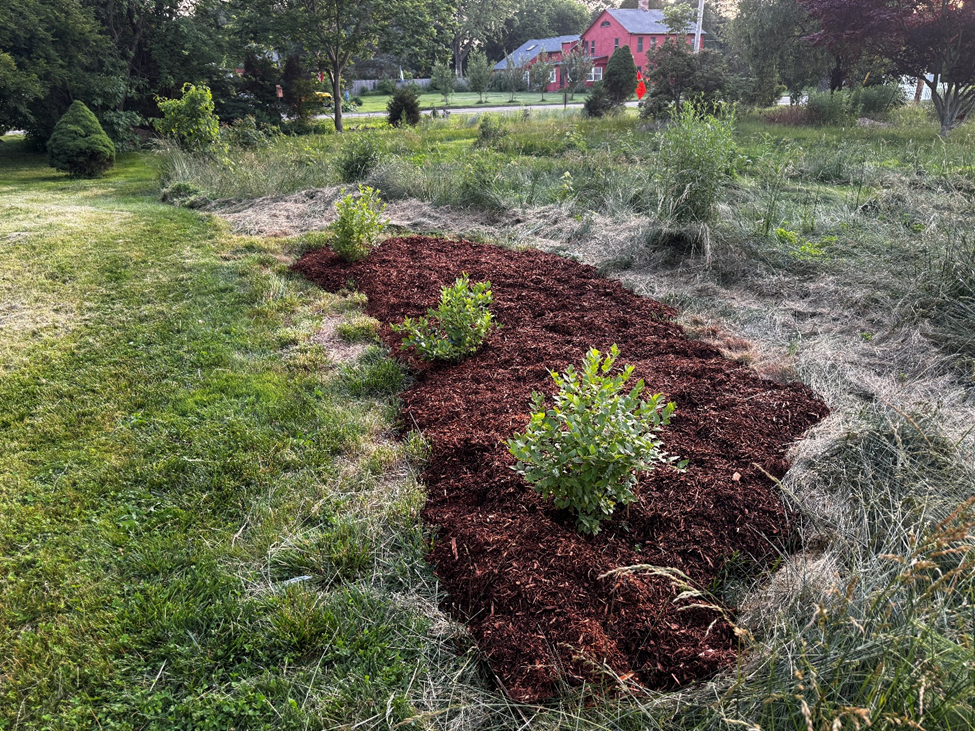
Over time, this once patchy area of grass between the shrubs will become a true bed. What was a lifeless lawn two summers ago, now invites quiet reflection among the ripening fruit. A zone of intention. Less mowing, less weeding, more habitat, and (hopefully) more fruit.
After all that work, I paused for a small reward: a single ripe blueberry from the middle shrub. After a quick cleansing wipe on my shirt, I popped it into my mouth. The bitterness of last year’s fruit was gone—replaced by a pleasant balance of tartness and sweetness that lingered on the tongue longer than expected. Small, but full of promise.
I walked the line of shrubs, observing each one more closely. The middle plant was clearly in its stride, with a few more berries nearly ready to pick. The easternmost bush looked healthy too, with a bounty of green fruit forming, though at least a week behind. And the westernmost? Still reluctant. For the second year in a row, it hadn’t produced a single berry. It’s possible it just needs more time, or perhaps a little extra care. I’m trying not to rush it. Everything in the garden seems to follow its own tempo anyway.
Still, this year already feels like a step forward. With the grass now suppressed, I can water the shrubs more efficiently, using rainwater I collected earlier in the season. The shrubs no longer need to compete with turf roots for every drop of moisture. And with the mulch in place, that moisture should last longer in the heat.
But something was missing.
As I stood between the shrubs and surveyed the mulched bed, a thought I’d been trying to shake returned. A thought about a kind of quiet that didn’t sit right. Where were the bees? The butterflies? Last year, the garden had been buzzing by now. This year, the blossoms swayed in the breeze with only a few visitors. No soft hum, no frantic darting. Silence.
I had hoped it was just my imagination. But none other than fellow The Cultural Easton author, Ken Coulson mentioned on Facebook he had noticed the same, my heart sank. There is a Russian term for where to expect the bottom in a broken system, “там нет дна”, which translates to “there is no bottom.”
It’s hard not to take it personally when you’re trying to do things right. Native plants. No pesticides. Harvesting rainwater. Meadow left wild on purpose. It should be enough. But thinking our small patches can insulate us from the broader unraveling is a fool’s errand. They can’t. At least not alone.
Yet, I still believe these spaces matter. They’re where memory lingers, and maybe where healing begins. My children know the names of these plants. They know where to look for monarch caterpillars, even if we haven’t found any this year. They’ve watched birds nesting in the shrubs we planted and seen the butterflies drinking nectar from the coneflowers.
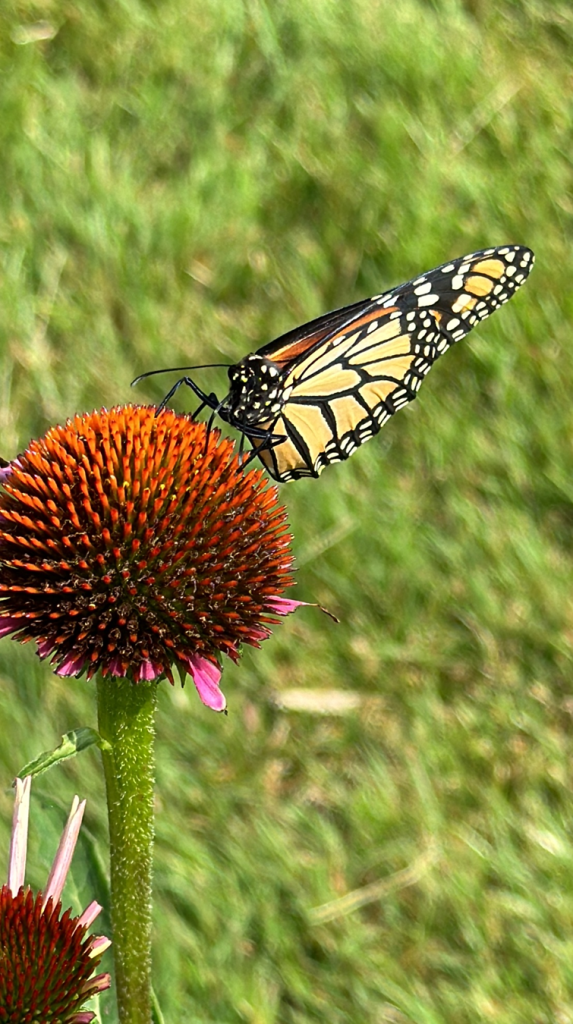
This garden may not be able to save the world, but it’s a place where I try to listen. To the land, to the plants, and now, too, to what’s no longer there.

