Despite a short burst of cold days, spring has arrived in Easton. The trees are burgeoning, the buds appearing brilliant in contrast to the overcast April skies. On the ground, the slowly warming soil is stirring last year’s perennials to sprout forward from the Earth. The hydrangea are starting to leaf out, a welcome sight for the three different varieties residing on Manor Lane. One of them, the oak leaf variety, plays a prominent role in the yard. An anchor plant, if you will, that serves as the backyard’s cornerstone.
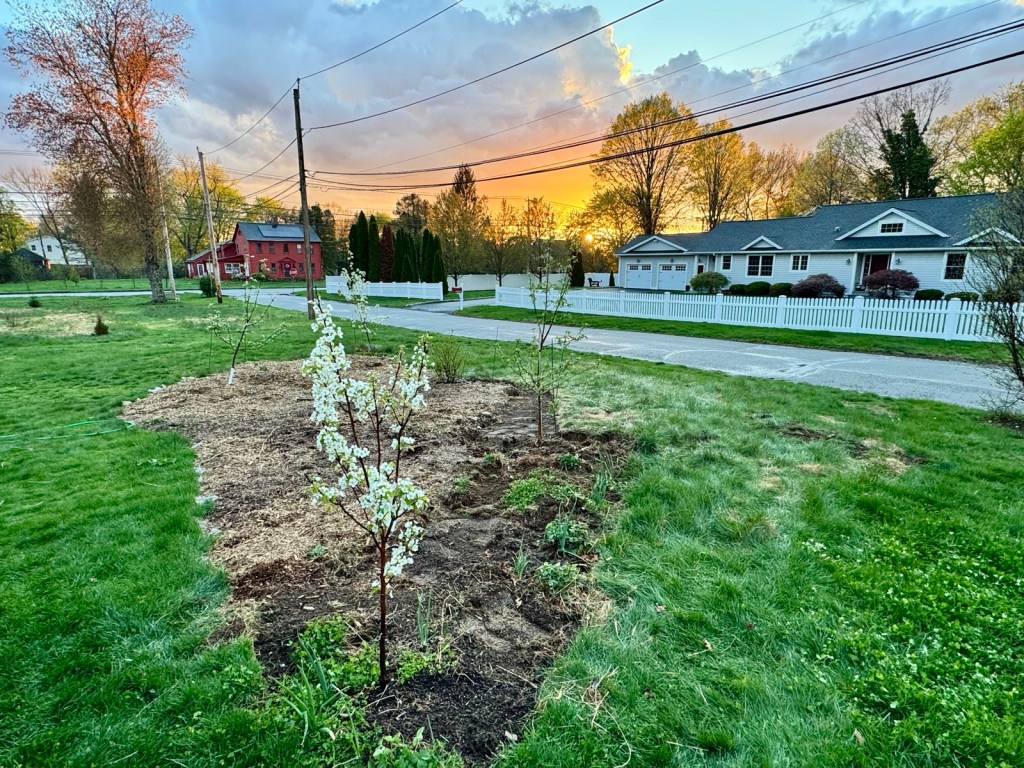
In the front yard, the fruit trees I planted last year have also survived the winter. The pear trees have already flowered and the apple trees have buds aplenty. Our project of turning extra lawn into a food forest is only in its second year, but is ready to bear fruit. Granted, we’ll pick most of the growth off early so the trees can focus more of their energy on establishing their roots. Patience now will be rewarded in future years.
With the weather warming up consistently over fifty degrees, or close enough, our spring cleanup began. I trimmed last year’s asters, black-eyed Susans, and milkweed stems close down to the base. The Susans, as they have done for at least a decade, have already started leafy growth that will stretch into mid-summer before they bloom their hallmark yellow and black for the pollinators once again. The swamp milkweed hasn’t shown signs of life yet, but it’s still early. A few more weeks of warmth, and they too will reach for the sky.
In a few weeks I’ll trim the forsythia that is growing wild and into the road. Any further and I won’t be able to see down the lane while I’m pulling out of the driveway. I’ll be sure to leave plenty of cover for the sparrows and cardinals that use the bushes for shelter. Nothing too boxy, the random disorder of the natural growth is more hospitable to the creatures.
In the garden, we’ve sown lettuce, carrots, and onions. We have beans, peppers, and tomatoes growing in front of a window in the house. Our goal for the season is to satisfy our family’s produce needs through the fall, while minimizing waste from the entire process. Organic food grown conscientiously in Easton’s fertile soil.
Taking the time to notice all of this, from the brilliant yellows of the forsythia to the stunning white flowers on the pear trees, is a subtle form of resistance to the changing world around us. On Earth Day and in Earth Month, it’s wise to be thankful for all that we have, while also mourning the damage wrought by an insatiable economic system, one that mistakes growth for health and wealth for wellbeing.
Tending to my plants and “yardening” with my wife is an annual cleansing ritual. We shake off the bitter winter, and begin again refreshed for what’s ahead.
From all of us here at The Cultural Easton, happy Earth Month.
Jonathan Webster
April 22, 2026 – Earth Day

