The mid-day sun was beating down on the driveway, and the panels on the roof of a white house were soaking it in. A sign directed visitors to climb a slight hill for a tour, and at the top of the path there was a table stocked with skincare products and an umbrella for shade. Behind the table, a woman explained the assorted items to three visitors. On this year’s Citizens for Easton Farm Tour, I was at Rising Iris Farm on Lantern Hill Road in lower Easton. While waiting my turn to talk to the farmer, I wandered between rows of flowers and countless pollinators of both common and specialist species. On a swamp milkweed, one of my personal favorites, I watched as a monarch laid its eggs on a leaf.
The farm, founded by Rachael Kemery initially as a flower farm, transitioned to harvesting flowers for use in skincare apothecary. Unfamiliar as I am with botanicals, what drove my decision to visit was the word “regenerative” in the farm’s description on the map. Sure enough, there was nothing commercial about the property. In fact, it is a little, well, messy. “This is how mother nature wants to be,” said Rachael, “And at least here for me, everything thrives when it’s overgrown and when it’s wild and you’re not mowing every week.”
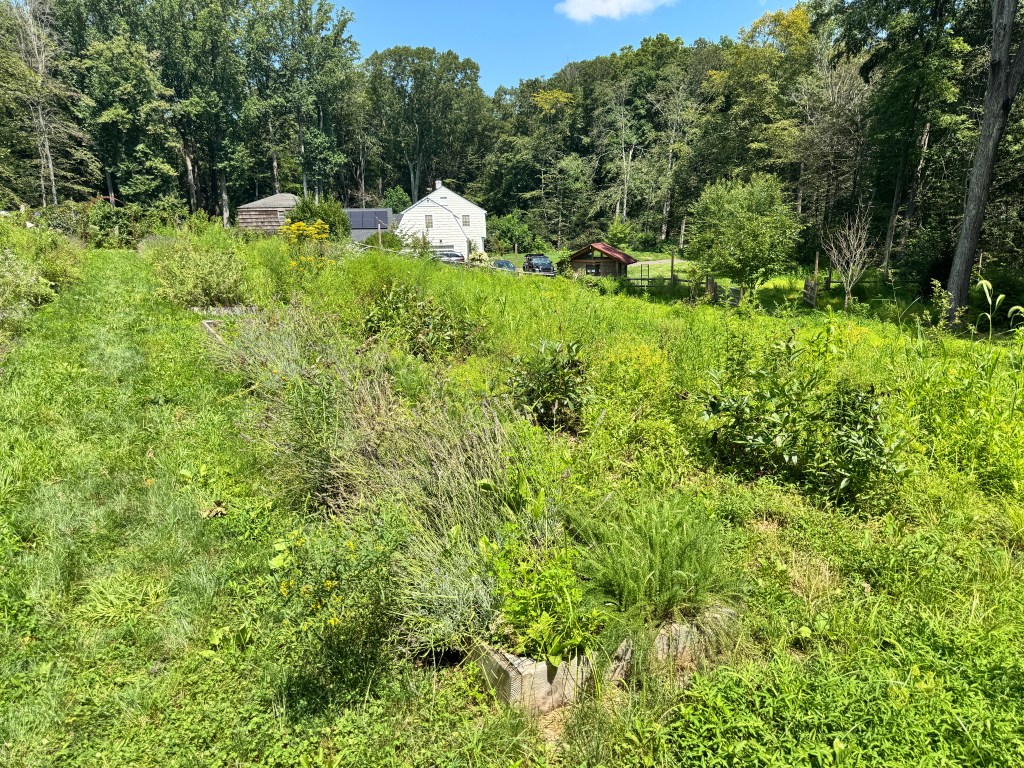
As we talked and the sun streamed through the tree canopy, the shade danced on the ground. Behind us, a lone native rudbeckia grew out of the surrounding grass. Not planted purposefully in this area but transported through natural processes from the other side of the property, where Kemery started them from seed, probably via a winged creature. The purple coneflowers in the organized rows, Rachael said, also came from the soil’s seed bank. All that it needed was to keep the mower in the garage.
Kemery harvests only what she needs for her small-batch skincare line and is mindful that the land is not just for her business. “I only harvest about twenty percent of the lavender because it’s all I need, and I save the rest for the bees.” On this sweltering day, there were bees all over the mindfully harvested plants.
Once she picks the flowers, they go through a maceration process. The material is dried and then infused into oil overnight under low heat. Then, the flowers are left in the oil for two to three weeks to pull out the beneficial compounds of the plant. Rising Iris uses this process to craft a variety of products, including serums, renewal masks, skin balm, and softening lip oil.
With some new knowledge of apothecary, we transitioned to discussing what makes the process regenerative, aside from leaving enough for the bees. Regenerative agriculture is farming that enhances the surrounding ecosystem, community, and economy. There is no definitive practice that makes a farm regenerative, rather it is a combination of sustainable agriculture techniques. Rachael explained that most of the flowers on the farm are perennial, and many of them are native species that do not require irrigation. There are also no herbicides or pesticides used on the farm, she said. Rachael described the parcel as lacking in lightning bugs when she first moved in, and the change to a regenerative mindset allowed them to return in serious numbers. One year, the farm made a deliberate effort to hatch and protect monarchs, and now every year they come back.
As Rachael and I wrapped up our conversation, she gave me samples of her evening repair serum and calm balm. As I pulled out my phone to follow the business on Instagram, I saw that my wife was already a follower and will be pleased to have the samples. The best place to buy Rising Iris products is the farm’s website. Also, give it a follow on Instagram, @risingirisfarm.
Kemery has started something special on Lantern Hill Road, a true Easton hidden gem. As for her goals for the business and the land, Rachael says “I know it’s just the tiniest little corner of the world, but people come and they see it, and I think they’re like, oh, it doesn’t have to look the way that we think it has to look. There is a different way to do it.”
As I walked back to my car, samples in hand, a monarch flew over my left shoulder and continued into the shade of the trees. Of course, I couldn’t tell if it was the one I had seen on the milkweed, but the thought did pop into my head. And that’s part of what Rachael is trying to do with her business, “I’m hoping it plants a seed in people’s minds.”

