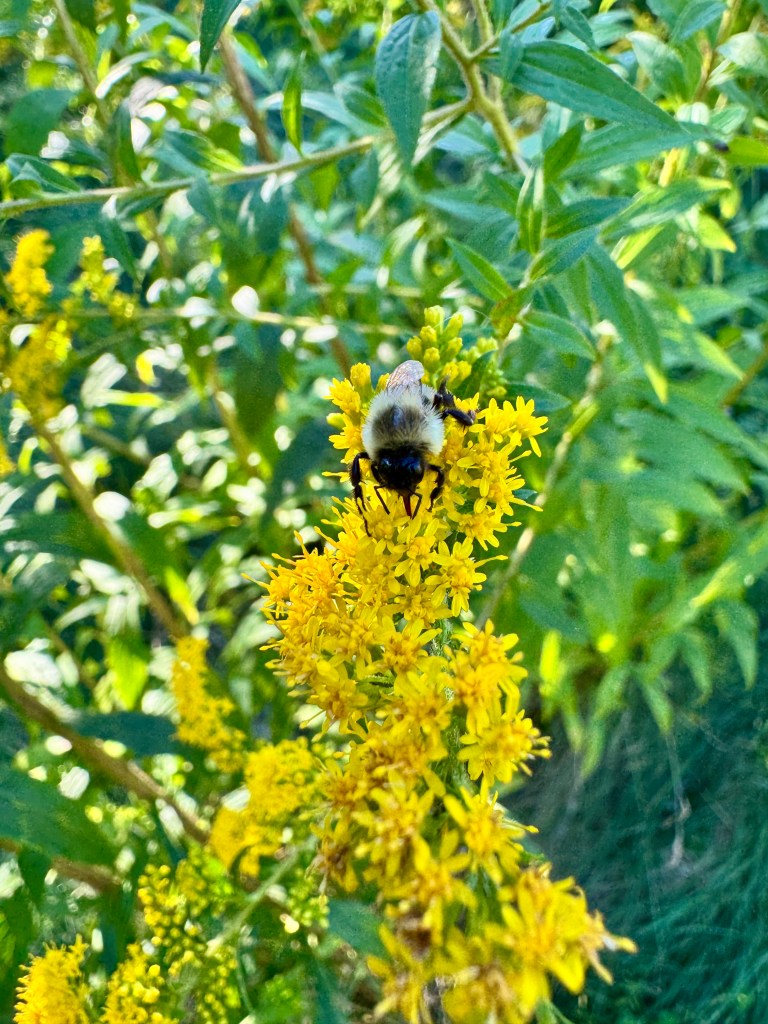
It’s almost autumn and the fall colors are slowly starting to arrive. All along the roads, tall flowers are bowing with yellow and gold blooms. The goldenrod plant, which produces both nectar and pollen, is an important late-season food source for pollinators. It attracts a range of them, from native bees to some species of beetles and of course the migrating monarch butterfly.
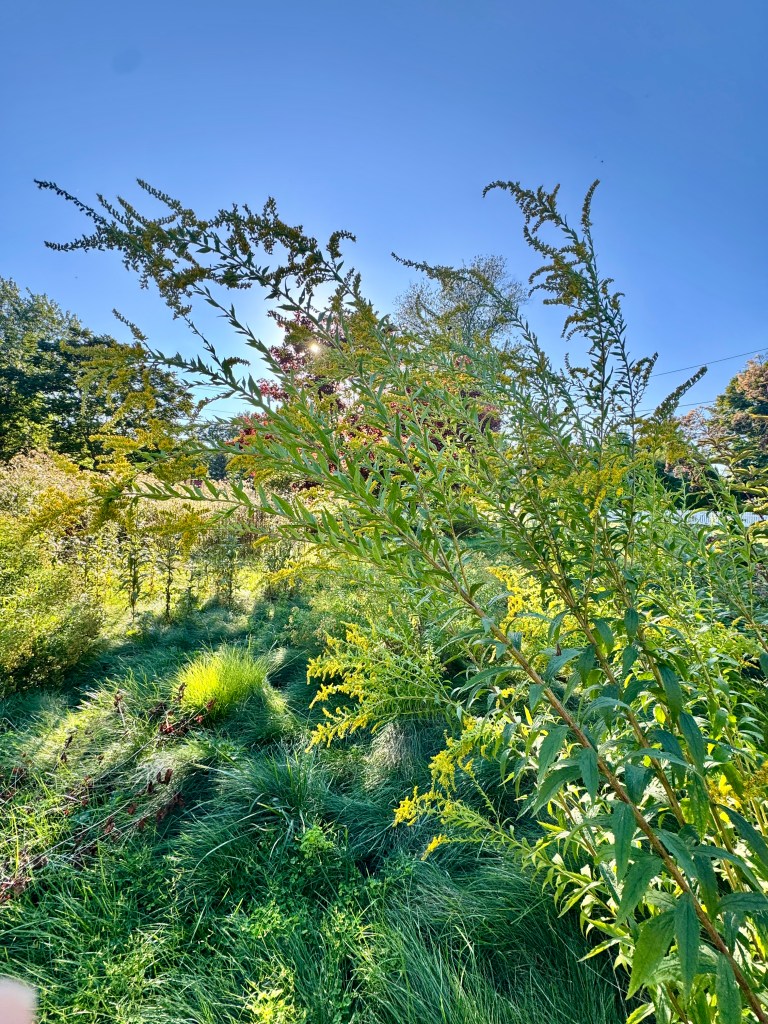
There are several species of goldenrod, and the tiny meadow I’ve allowed to grow sports the wrinkleleaf, seaside, and grass-leaved varieties; Solidago rugosa, sempervirens, and Euthamia graminifolia respectively. After watching the stems grow taller throughout the summer, it’s a joy when they start to bend under the weight of their plentiful small compacted flowerheads. This year, the plants grew to almost five feet tall. There is a common misconception about the plant, as it is accused of causing fall allergies. However, the pollen of the plant is too heavy to be dispersed by wind, and it relies on the visiting pollinators for fertilization.
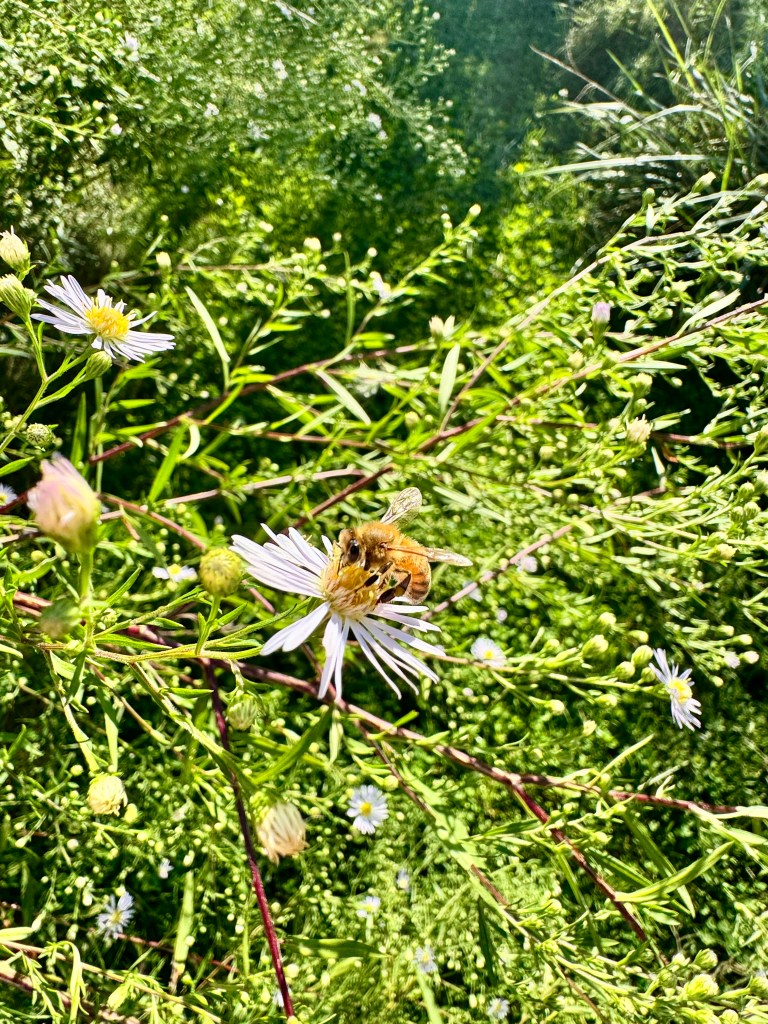
Another sign of fall arriving at the meadow comes in the form of the blooms of the white-panicle aster, Symphyotrichum lanceolatum. I planted this species in a small flowerbed early on in my native yardening journey, and it has since spread all over the yard. There isn’t a corner of the property where you can’t find the flowers poking out along the edges of shrubs and tree lines. Of all the species that I have sought to grow here, this has been by far the most successful. If I didn’t want it, I would view its prolific spread as aggressive. The small white petals surround the perfect yellow flowerhead, another welcome stop for late-season nourishment for pollinators of all types. Together, these two plants are a proverbial last call from the meadow’s bartenders.
Another sure sign that the first frost is approaching is the snowy seeds of the milkweeds starting their journey. The purple flowers are mostly faded, replaced by seed pods that started out a brilliant shade of green, and have now started to shift to a brownish yellow. I started last season with three swamp milkweed plants in the front lawn, and in just one season later I had over twenty grow and attract copious pollinators, most notably monarchs, eastern tiger swallowtails, and the great golden digger wasp. The wasp looks fearsome, but when feeding on the nectar, it evinces no alarm, contented enough to allow for a close-up snapshot. On Tuesday, the season will officially shift to fall, Easton’s busy time of agrotourism and leaf peeping. The preserves too will attract more visitors, as the bugs start to disappear and the weather becomes more conducive to long walks in the woods. On this last weekend of summer, the milkweed seeds are already adrift, riding the wind that carries them across property lines and beyond. Soon enough, visitors will be following the same instinct in reverse, drawn toward Easton for apples and pumpkins and foliage in the afternoon golden hour light. Wishing you a glorious fall and I hope to see you on the trails.
 The Cultural Easton