Picture this, you wake up one morning and your phone is fully charged. As you look to check your emails, you’re unable to load them. No text messages, no calls, no data, no nothing. Where you would normally see bars all that’s present is an SOS icon.
Your phone seems to be working, but the grid doesn’t.
This isn’t a dystopian dream. If you’re a Verizon customer, you may have experienced this recently as an outage left millions of customers disconnected. Sure, your WiFi probably picked up the slack, but what if that wasn’t an option? Governments around the world have demonstrated that centralized infrastructure can be used to cut off internet access. And, as Ken wrote this week about climate volatility, we know that storms, fires, and floods can knock out cell towers and fiber lines.
Our lives are hyper-connected. Our infrastructure is not particularly resilient.
Which is why a small gray piece of equipment showed up in my mailbox last week.
The device arrived about a week after I placed the online order. After watching the shipping updates with growing anticipation, I was excited to get home from work and unbox my new tool. It was underwhelming, but that was only my initial reaction. As a friend put it, my new wireless communication device looks “like a Blackberry had a baby with an old FM radio.” But, then I learned how to use it, and my customer satisfaction score rose materially.
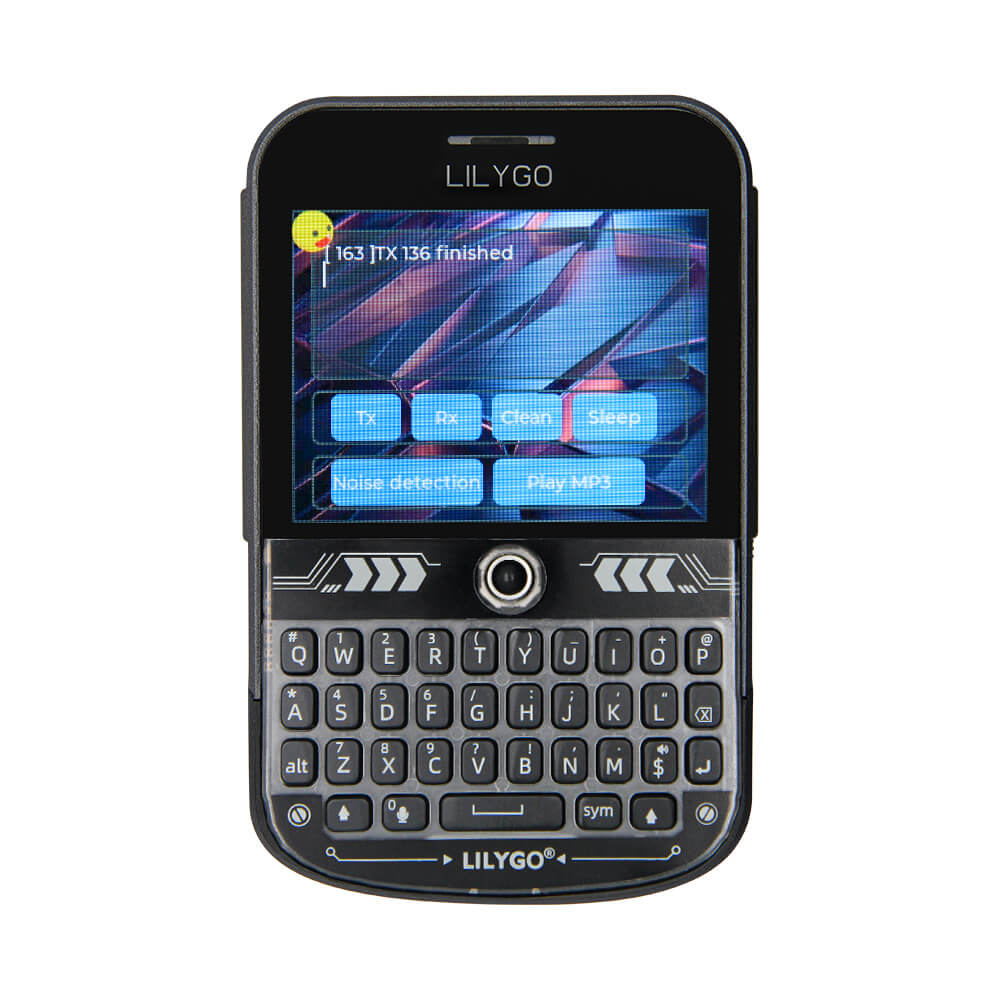
The device, a LilyGo T-Deck Plus, has a tiny keyboard, a screen that is far from the HDR quality of a cell phone, and a much bulkier build with an external antenna. It runs on an open-source protocol called Meshtastic. The technology uses LoRa, low power, wide-area network radio waves on unlicensed bands of the spectrum. If you have a mesh system in your home for wireless internet access, these devices apply a similar technology. Each “node” in the area acts as both a user and a relay. In your home, the routers you spread throughout the house are all centrally connected to your modem. With a Meshtastic device, there is no centralized point of failure. Each node in the mesh stands alone.

This isn’t a smartphone replacement. There are no streaming apps or games, there is no email or web browsing. You definitely won’t be taking FaceTime calls or meeting over Zoom. You can, however, send simple, encrypted text messages to other nodes of your choosing. What you are getting is a form of redundancy for communicating with friends and relatives.
There is a learning curve to setting the device up. There is no guided setup screen and, if you’re like me, you’ll need a few YouTube videos and some internet searches to set up your first connection. But this inconvenience is the price you must pay for a more resilient communication platform.
Redundancy is rarely convenient, until you need it.
Over the past week, I’ve established encrypted connections with a few friends. Messages have traveled miles without touching a cell tower or an internet provider. Just low-power radio waves quietly doing their thing.
To me, the coolest part isn’t the technology alone, its the architecture of the network. When Frontier first came in town, you could see the trucks stringing fiber optic cables from utility poles all over town. With Meshtastic, neighbors can grow the town’s mesh network from the ground up. Instead of the network growing vertically and controlled by a corporation, it grows horizontally with local control from the ground up.
As more Easton residents decide to try out their own nodes, an increasingly connected parallel communications network would strengthen with each new addition. Stewardship is a frequent topic in town, of land, water, and historical structures. Communications also require stewardship. By adding more nodes in town, we are creating a better functioning, locally owned network. That makes my recent purchase feel less like a hobby gadget purchase and more like a small investment in civic responsibility. At least, that’s what I’m telling my wife.
If you’re interested in joining the growing network, feel free to reach out. I’m happy to share my (limited) experience and knowledge of nodes with neighbors.
Jonathan – JJWEastonCT@protonmail.com
 The Cultural Easton