Last Friday, I took some time off to do some yardening and take the kids to Easton Night at Quassy. I needed to weed the food forest’s flower bed. Last year, I planted three swamp milkweed plants and three common milkweed in the sheet-mulched bed in the front lawn. Unlike the slender yellow woodsorrel that I would be pulling today, the milkweeds are there intentionally.
After learning about how important the plant is for the monarch butterfly, I decided that I wanted to become an official Monarch Waystation. Like the Aspetuck Land Trust’s green corridor partner designation on our mailbox, a Monarch Waystation comes with requirements. Monarch Watch’s guidance calls for at least ten milkweed plants, ideally of two or more species, and a sunny spot in which they can grow. It also calls for other plants that are nectar sources for pollinators, like coneflowers. So last year, my efforts to get to ten milkweeds included the six previously mentioned, as well as four butterfly milkweeds in the backyard.
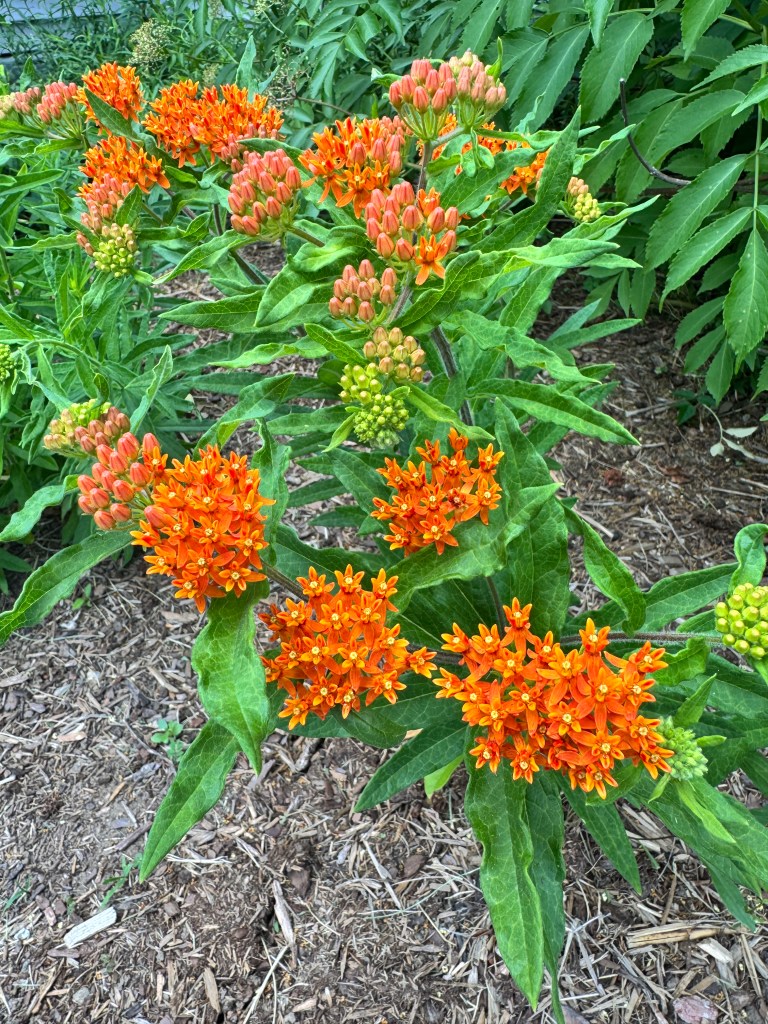
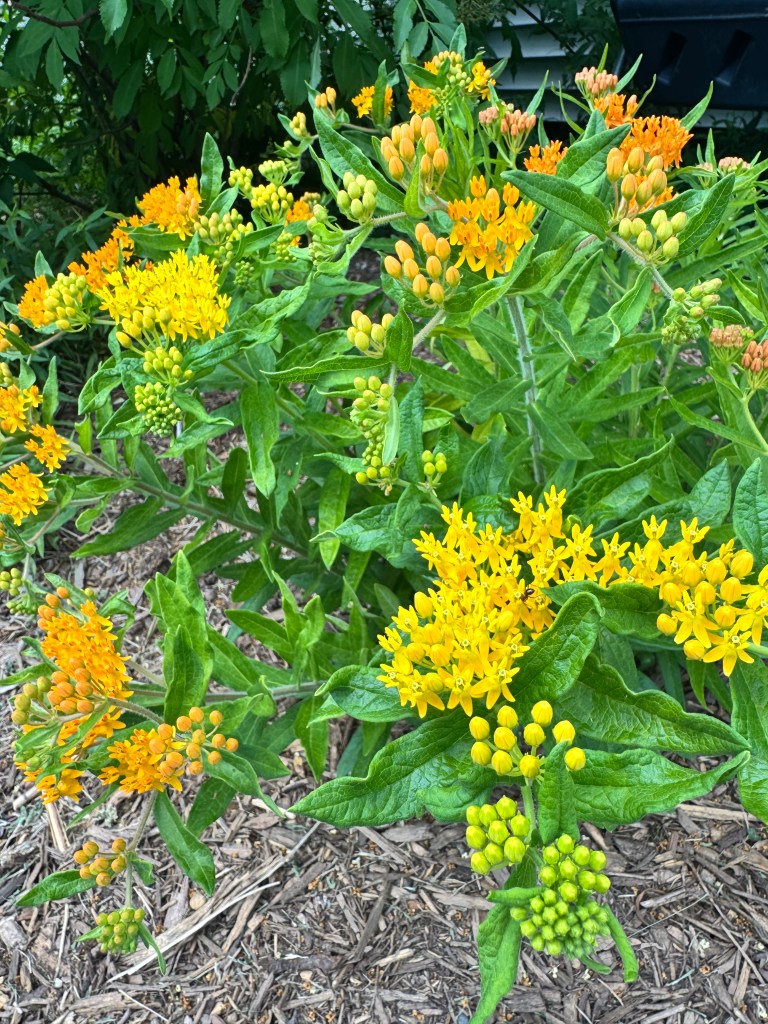
This spring, I’m getting my first look at why Monarch Watch calls for two species. In the backyard, after weeks of seeing tiny compressed bulbs in shades of orange and yellow, the butterfly milkweed has started to bloom. First a few flowers, then every day a noticeable amount more. I haven’t seen a butterfly on them yet, but my hopes remain high. All four plants came back this year, money well spent on a hardy native perennial. In the front, the swamp milkweeds are still a couple weeks away from being ready to bloom, acting as staggered feeding sources.
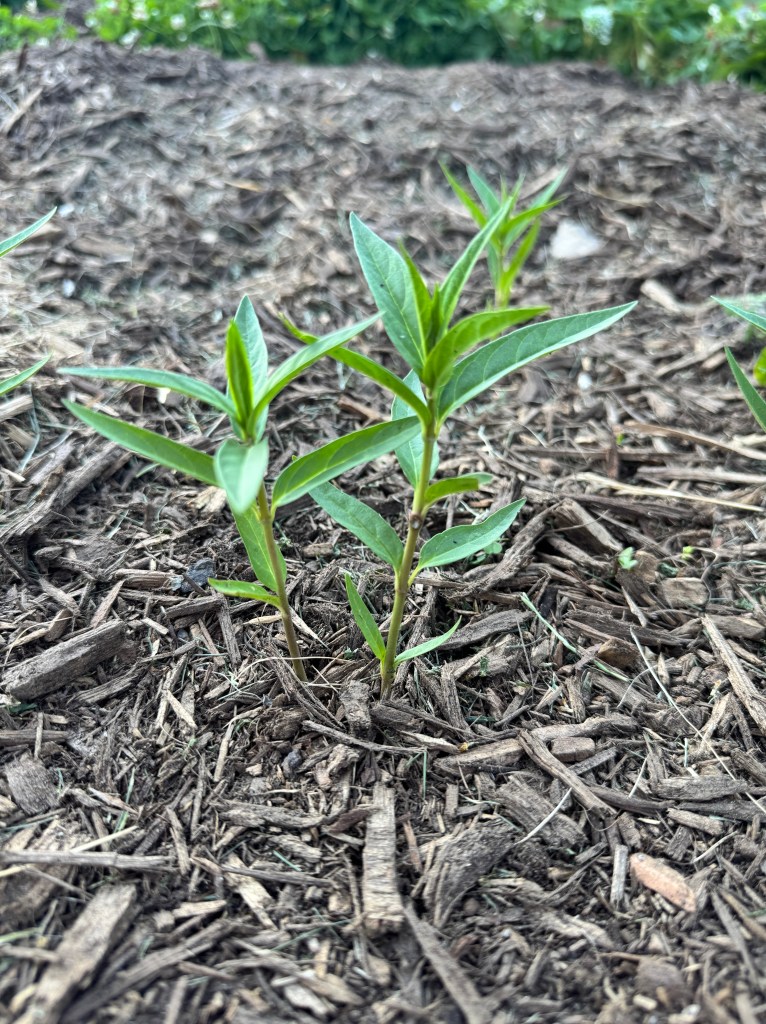
While the front plants aren’t ready to bloom, something more exciting has happened that I only recently noticed while weeding. The plants I let go to seed last year did their job. As the season wound down, I didn’t trim the stems. I didn’t clean up the seed pods either. I let them split open on their own and the silk get carried wherever the wind wanted to take the seeds. My patience, I’m pleased to report, has been rewarded. In addition to the three core plants put in last year, the garden now features twenty new shoots sprouting from the mulch. All I had to do was let nature take its course, and it delivered.
Gardeners are often told to deadhead flowers, square edges, and present tidiness as a sign of care. But a seed pod bursting open in silky white is not messy, it’s natural. It’s what these plants were designed to do by somebody much more authoritative than any master gardener.
There’s a lesson in each of these species. The butterfly milkweed is a lesson in here and now, its bright orange and yellow flowers drawing in pollinators. A daily reminder to stop and look at how many are blooming each day. To be present. The swamp milkweed is a reminder of what can happen when we allow a plant to do the most generous thing it can do. What may look like October neglect to some is just generosity that is yet to be realized.
Monarch butterflies are in a battle for survival, along with many other pollinators. There are a lot of reasons why and almost all of them are things outside of our control: habitat loss, herbicides and pesticides, a continent of paved paradise and parking lots, and the rapidly changing climate. The problems are so big that it’s easy to feel helpless. But look what happened in one flower bed. If three plants can become twenty in a single season, maybe there’s hope.
This fall, the plants will again go to seed. This time, I may harvest some to plant in different areas of the yard, creating new pollinator patches. That matters. It’s my small way of putting my dirt-covered fingers on the waystation scale to help fix problems that seem insurmountable. Writing about it and sharing the story with neighbors is another. Who knows, maybe with a good seed harvest in the fall, I can spread some seeds to other yards in the hopes of triggering exponential growth in Easton’s milkweed population.
One can dream. And maybe even guerrilla garden 😉